 English
 Deutsch
 Czech
Czech
 Polski
 Italian
 French

Upholstered cat trees for large cats combine long sisal-wrapped posts with spacious beds, hideaways, hammocks and platforms suited to a larger body. The category includes lower resting models and tall, multi-level constructions for one or several cats. When choosing a cat tree for a large cat, compare the post length, actual bed dimensions, level layout and base size.

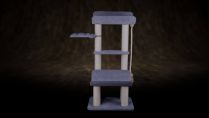
Cat Tree for Large Cats – Upholstered D-10

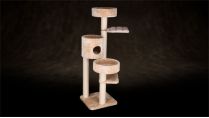
Cat Tree for Large Cats – Upholstered D-9A
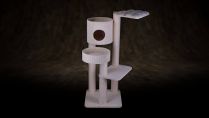

Cat Tree for Large Cats – Upholstered D-9
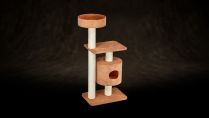
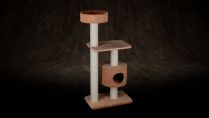
Cat Tree for Large Cats – Upholstered D-8
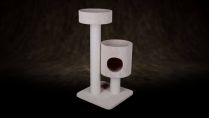

Cat Tree for Large Cats – Upholstered D-5
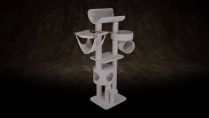
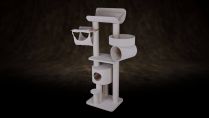
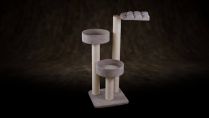
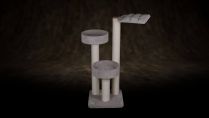
Cat Tree for Large Cats – Upholstered H-1
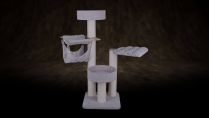
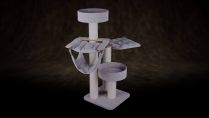
Cat Tree for Large Cats – Upholstered H-2


Cat Tree for Large Cats – Upholstered H-2A


Cat Tree for Large Cats – Upholstered H-2B


Cat Tree for Large Cats – Upholstered H-2C
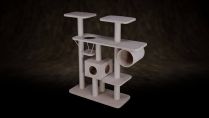
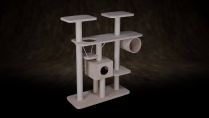
Cat Tree for Large Cats – Upholstered H-3
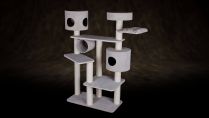

Cat Tree for Large Cats – Upholstered H-4
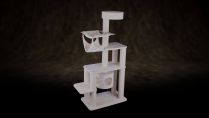

Cat Tree for Large Cats – Upholstered H-5
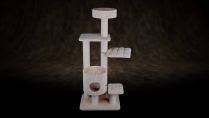
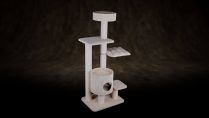
Cat Tree for Large Cats – Upholstered H-6
Cat Trees for Large Cats – Upholstered Models for Scratching, Climbing and Rest
An upholstered cat tree for a large cat should combine a stable construction, sufficiently long scratching surfaces, spacious resting areas and a soft fabric finish on the base, platforms and selected components. With a large and heavy animal, simply increasing the overall height of the construction is not enough. The proportions of the complete cat tree, its supporting points and the actual amount of space available to the cat are equally important.
This category contains models intended for customers looking for a construction suitable for a larger cat while preferring a traditional fabric-upholstered finish. A comparison of the different types of constructions is available in the main cat trees for large cats category.
The available products include lower cat trees with one main resting area as well as tall, extensive models equipped with several platforms, houses, hammocks, trough-shaped beds, tunnels or other components. This makes it possible to choose a construction suited to the size and activity of the cat, the number of animals and the amount of space available in the room.
What distinguishes an upholstered cat tree for a large cat?
The term “upholstered” refers to the way in which the construction is finished. Depending on the model, fabric may cover the base, platforms, houses, beds and selected resting components. This gives the cat tree a softer, more traditional appearance and creates comfortable surfaces on which the cat can sit or rest.
An upholstered finish does not replace the surfaces intended for claw maintenance. A cat still needs sufficiently long posts covered with sisal, allowing it to perform a complete stretching movement, grip the surface with its claws and climb.
An upholstered cat tree for a large cat should therefore combine two types of surfaces: soft resting areas and durable sections intended for scratching. The functionality of the construction depends on the appropriate arrangement of both zones.
Which cats are these constructions intended for?
The cat trees in this category may be suitable for larger and heavier domestic cats as well as breeds with a powerful build, long body or higher body weight. These include Maine Coons, Norwegian Forest Cats, Ragdolls, Siberian cats and large, substantial mixed-breed cats.
The name of the breed should not, however, be the only selection criterion. Two cats of the same breed may differ considerably in weight, body length, mobility, age and the way they use a cat tree. One animal may climb the posts intensively, while another may use the construction primarily as a place to rest.
Before purchasing, consider not only the size of the cat but also whether it prefers high observation points, enclosed houses, soft hammocks, open platforms or elongated beds that allow it to stretch out fully.
The stability of an upholstered cat tree for a large cat
A large cat loads a cat tree both with its body weight and with the forces generated while jumping, climbing and changing direction suddenly. The dynamic load produced during a jump can be considerably greater than the weight of an animal resting quietly.
For this reason, stability should not be assessed solely on the basis of the product’s weight, the size of the base or the diameter of the posts. The arrangement of the supporting points, the position of the upper beds, the distance of the platforms from the central axis and the way the individual components are connected are also important.
A tall cat tree with a resting area extending far beyond the centre of the base will be subjected to different loads than a construction in which the upper components are positioned directly above the supporting posts. The larger and more active the cat, the more important the proportions of the complete construction become.
Further information about bases, platforms, posts, sisal and mounting components is available in our guide: how to recognise a good cat tree.
A long surface for scratching and stretching
A cat tree for a large cat should allow the animal to extend its front paws freely and stretch its entire back. A post that is too short forces the cat to adopt an unnatural position or to use only the lower part of the sisal-covered surface.
A longer, uninterrupted section enables the cat to perform a complete stretching movement. For an active animal, it can also serve as a vertical climbing route.
When comparing models, check not only the overall height of the cat tree but also the length of the individual posts. A construction may be tall while being divided into several very short sections that do not provide sufficient space for the cat to stretch its body fully.
Large beds, platforms, hammocks and houses
Resting areas should be suited to the actual dimensions of the cat. The external size of a platform or rosette bed does not always correspond to the surface that the animal can actually use.
With beds surrounded by a raised rim, the dimensions of the internal area must be considered. For hammocks, the usable textile surface is important, while houses should be assessed according to their internal width, entrance size and the space available for the cat to turn around freely.
A large cat does not always sleep curled up. Many animals rest with their entire body extended or prefer long, open beds. It is therefore worth observing the natural sleeping position of the particular cat before choosing a model.
Soft finishing and resting comfort
Upholstered surfaces create soft places for sitting and resting. They may be particularly attractive to cats that like to lie directly on platforms and do not require additional thick cushions.
The upholstery also affects the appearance of the complete construction. The cat tree can be coordinated with the colour scheme of the interior and other elements of the home.
Before choosing a finish, consider how the fabric will be cleaned, how intensively the cat sheds and how many animals will use the construction. In a multi-cat household, the resting surfaces will be used considerably more intensively than by one calm animal.
Cleaning and replaceable covers
Depending on the model, selected hammocks, beds and covers may be removable for cleaning. Before purchasing, check the product specification to determine which components can be removed and which are permanently upholstered.
The possibility of washing or replacing the most intensively used components makes the cat tree considerably easier to maintain. This is particularly important with large constructions whose bases, platforms and posts may remain in use much longer than their textile parts.
Regular cleaning removes hair, dust and minor dirt, while the availability of replacement components makes it possible to refurbish the cat tree without replacing the complete construction.
An upholstered cat tree for one or several cats
For one large and calm cat, a construction with one main bed and an additional observation platform may be sufficient. For two or more animals, models offering several independent resting areas will usually be more suitable.
Not only the number of platforms matters, but also the way the cats can move between them. The animals should not block one another’s only access route or be forced to pass directly through a resting place occupied by another cat.
In a home with several active cats, consider constructions with several supporting points, separate scratching surfaces and resting areas positioned at different heights.
An upholstered cat tree for a Maine Coon or the EX-MAX range?
A Maine Coon can use a properly selected upholstered cat tree, provided that the construction offers sufficiently large resting areas, stable support and convenient access to the successive levels.
Customers looking for a product range developed specifically around the needs of this breed can also compare the cat trees for Maine Coons – EX-MAX. These constructions use a different type of finish and feature large resting components and posts characteristic of the EX-MAX range.
The choice between an upholstered cat tree and an EX-MAX model should depend on the preferred type of finish, the arrangement of the resting areas, the overall dimensions of the construction and the individual habits of the cat.
An upholstered cat tree or a large Kaktus EX-KAK model?
Kaktus EX-KAK is a separate construction range distinguished primarily by cylindrical posts with a diameter of 27 cm covered with thick sisal matting. The range is intended for customers looking for particularly substantial surfaces for scratching and climbing.
Upholstered cat trees for large breeds place greater emphasis on the traditional soft finishing of bases, platforms and resting components. Kaktus models, on the other hand, focus on their characteristic wide posts and the extensive area covered with sisal matting.
Models from the second group can be compared in the large cat trees – Kaktus EX-KAK category.
How to choose the right upholstered model
Before purchasing, compare the overall height and width of the construction, the dimensions of the base, the length of the posts, the size of the resting areas and the distances between the successive levels.
A young and active cat will make better use of a tall cat tree with long posts and several levels. A calmer, older or less mobile animal may prefer a lower model offering more gradual access to its large resting areas.
For several cats, also check the number of independent resting areas, the width of the routes between them and whether several animals can use the scratching surfaces simultaneously.
Before ordering, carefully measure the intended location of the cat tree. In addition to the floor space occupied by the base, allow enough room for the cat to jump onto side platforms and use the highest components freely.
A cat tree suited to the cat and the interior
Wondering how to choose the right cat tree for a large cat? Check out our guide.
A good upholstered cat tree for a large cat should combine a properly designed construction, sufficiently long posts, spacious resting areas and a finishing material suited to the conditions in the home.
A model should not be selected solely on the basis of its height, appearance or the designation “XXL”. It is considerably more important to adapt its actual dimensions and arrangement to the size, age, activity level and habits of the particular cat.
Other fabric-finished models can be found in the parent upholstered cat trees category.


