 English
 Deutsch
 Czech
Czech
 Polski
 Italian
 French

Cat trees for kittens and small breeds are designed around the compact build, activity and movement of young and smaller cats. The collection includes simple kitten cat trees with long sisal scratching surfaces as well as multi-level models with platforms, hammocks, tunnels and comfortable beds. Choose a cat tree for a small cat that provides space for scratching, playing, climbing and resting.
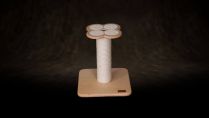
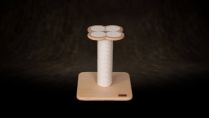
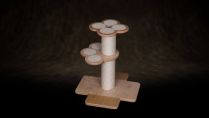


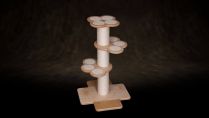
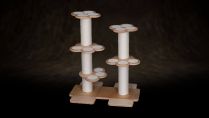
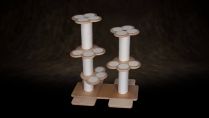
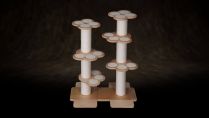


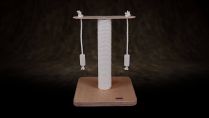
Cat tree for kittens EX-K-1


Cat tree for kittens EX-K-2
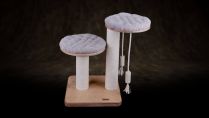

Cat tree for kittens EX-K-3


Cat tree for kittens EX-K-4


Cat tree for kittens EX-K-5
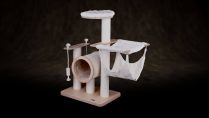

Cat tree for kittens EX-K-6
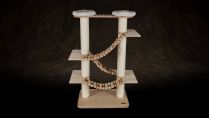
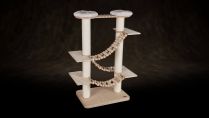
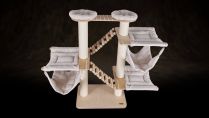
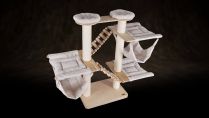
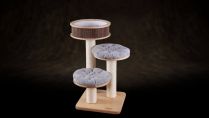

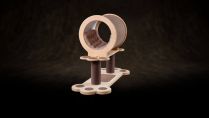

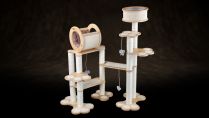

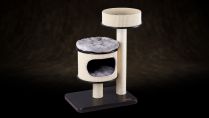

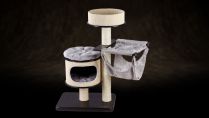
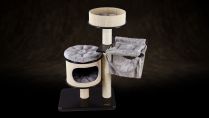


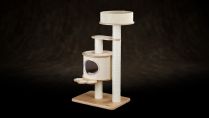
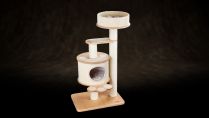

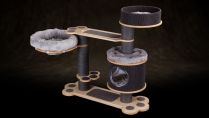


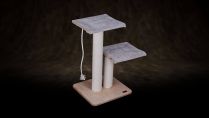
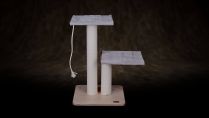
Cat Tree for Kittens EX-M-1
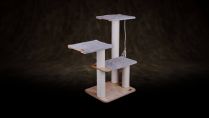
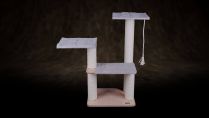
Cat Tree for Kittens EX-M-2
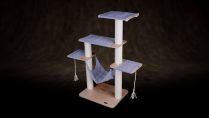

Cat Tree for Kittens EX-M-3
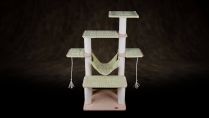

Cat Tree for Kittens EX-M-4
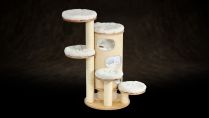
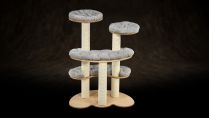
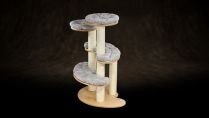
Cat trees for kittens and small cat breeds
Cat trees for kittens and small cat breeds are intended for young animals and adult cats with a compact build. The collection includes simple scratching posts as well as more extensive structures fitted with platforms, hammocks, tunnels, round beds, toys and several resting levels.
A correctly selected cat tree should suit not only the animal’s present size but also its age, temperament, mobility and way of using the available space. A kitten usually explores actively, climbs readily, plays energetically and changes direction quickly. An adult small-breed cat may require similar bed dimensions but a calmer arrangement of levels and a comfortable place to rest.
This category therefore combines cat trees for kittens with models designed for adult small cats. This makes it possible to choose according to the animal’s actual build and activity rather than its age alone.
Why does a kitten need its own cat tree?
Scratching is a natural feline behaviour that begins at a young age. A kitten uses scratching surfaces to maintain its claws, stretch its body, mark its presence and explore different textures.
A cat tree for a kitten creates a clearly defined place for these activities. The earlier a young cat becomes familiar with an attractive sisal surface, the easier it is to direct its attention towards the cat tree rather than a sofa, chair, carpet or other household furnishings.
A well-designed structure can perform several functions:
- a scratching surface for claw care and full-body stretching;
- a play area for climbing and developing coordination;
- an observation point above floor level;
- a bed where the kitten can rest after activity;
- an individual space to which the cat can return regularly.
A kitten cat tree and an adult cat tree
A good kitten cat tree does not have to be an exceptionally small structure. A young animal grows quickly, so its expected adult size should be considered before purchasing.
The smallest single-post models may work well as a first scratching place, an additional post in another room or a solution for a limited space. A more extensive structure with several levels may remain useful after the kitten has finished growing.
Before choosing, consider:
- the length of the accessible scratching surface;
- the size of the beds when the cat reaches adulthood;
- the distances between successive levels;
- how easily the cat can climb and descend;
- the stability of the complete construction during energetic play;
- the possibility of replacing heavily used components later.
A cat tree for a small cat – not only for kittens
A cat tree for a small cat can be intended for a young animal or an adult with a low body weight and compact build. This group includes small breeds, naturally slender cats and smaller domestic cats.
It should not be assumed that every cat of a particular breed has identical requirements. Animals of the same breed may differ in weight, body length, activity and resting habits. Compare the cat’s actual dimensions with the size of the platforms, hammocks, round beds and other components.
Cat trees for small breeds should provide enough space for the animal to lie down freely but do not need the enlarged beds and substantial components intended for the heaviest breeds. Appropriate proportions can make each level easier for a small cat to use.
How to choose a good cat tree for a small breed
The best cat tree for a small breed is not necessarily the smallest available model. The length of the posts, bed dimensions, total height and route between levels are more important.
Length of the scratching surface
The cat should be able to place its front paws high and extend its body comfortably. Even a small animal needs a sufficiently long sisal surface. A post that is too short may only be used in a crouched position and may be less attractive.
Size of the resting areas
A bed should accommodate the cat when curled up and when lying in a more extended position. When purchasing for a kitten, consider the expected dimensions of the adult animal.
Distances between levels
Kittens are generally active and agile but are still learning to judge distances and control their movement. Platforms should form a clear route that is easy to climb and descend.
Stability of the structure
A kitten is light but moves suddenly and often jumps onto the structure at speed. Stability should therefore not be judged only by the animal’s weight. The proportions of the base, post placement, platform layout, rigidity of the connections and correct assembly all matter.
Type of bed
Some cats prefer open platforms from which they can observe the room. Others choose hammocks, tunnels, round beds or more enclosed places. Observe where your cat usually sleeps and which surfaces it selects.
A simple kitten cat tree or a multi-level model?
A simple cat tree for a kitten with one post can be a practical first solution, particularly in a small apartment or as an additional scratching surface positioned near a sofa, sleeping area or route between rooms.
A multi-level model provides more possibilities. It may combine long sisal posts, platforms, hammocks, tunnels and toys, becoming a place for scratching, activity, observation and sleep.
The number of accessories alone should not determine the choice. A larger structure is useful only when its levels form a practical route, its beds are sufficiently spacious and it fits in a location that provides easy access.
A cat tree for several kittens or small cats
When the structure will be shared by siblings, several kittens or a group of small cats, choose a model with several independent resting areas. A single hammock or highest platform may quickly become occupied by the most active animal.
A cat tree for several animals should provide more than one movement route. Additional platforms, different levels and several sisal surfaces reduce situations in which one cat blocks the others from climbing or descending.
Small cats may enjoy sleeping together, but every animal should also be able to find a separate place for undisturbed rest.
Varnished wood, sisal and removable textile elements
Cat trees in this collection combine varnished wooden components, sisal-wrapped posts and soft resting areas. The visible wood gives the structure a clean appearance and can be vacuumed and wiped regularly.
Depending on the model, the beds may include removable cushions, covers or other replaceable textile elements. This makes hair removal and periodic cleaning of the most frequently used surfaces easier.
The ability to replace heavily used components can refresh the cat tree without replacing the complete construction.
Where should a kitten cat tree be placed?
Even a correctly selected kitten cat tree may be used rarely when positioned in a place the cat avoids. Kittens usually want to remain close to people and observe everyday activity, so a cat tree often works better in a regularly used room than in a remote corner.
A suitable location may be close to a window, the household’s seating area, the usual play area or a piece of furniture that the kitten currently tries to scratch.
Leave enough room around the structure for jumping on and off. It should not interfere with opening doors or stand where protruding components may strike nearby furniture.
A cat tree that remains useful after the growth period
When buying a cat tree for kittens, consider more than the animal’s present size. A very small model may work well during the first months but later become too low or offer undersized beds.
A practical choice is a model with a sufficiently long post and a resting area that provides some additional space. This does not mean that a kitten needs an enormous structure intended for the heaviest breeds.
If the young cat develops into a medium or large animal, later compare our cat trees for medium and large breeds.
How to encourage a kitten to use the cat tree
After positioning the structure, allow the animal to explore it calmly. Do not force the kitten onto the highest platform or move its paws across the sisal.
You can encourage interest by playing near the lower levels, moving a toy towards the post, placing a familiar blanket on a bed and rewarding voluntary interaction with the structure.
Every cat becomes familiar with a new object at a different pace. Some kittens use a cat tree immediately, while others need several days to observe it.
Choose the right cat tree for a kitten or small cat
A good cat tree should offer a sufficiently long sisal surface, a comfortable resting place, a clear route between levels and a structure suited to the animal’s activity.
Compare the available cat trees for kittens and small breeds and choose a model that suits the cat’s present size, expected adult dimensions, mobility and preferred way of resting.
Other wooden structures are available in the main collection of exclusive cat trees made of varnished wood.


