 English
 Deutsch
 Czech
Czech
 Polski
 Italian
 French

Cat trees for medium and large breeds form Rufi’s largest collection of wooden cat furniture. It includes simple models with a long sisal scratching post as well as extensive structures with platforms, hammocks, houses, tunnels and comfortable beds. Choose a sturdy cat tree suited to your cat’s size, activity, resting habits and the available space in your home.

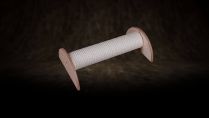
Cat tree for cats EX-P-0

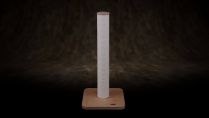
Cat tree for cats EX-P
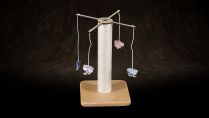

Cat tree EX-P with carousel
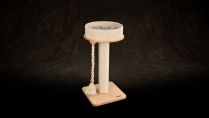
Cat tree for cats EX-P-1

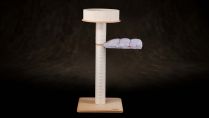
Cat tree for cats EX-P-2
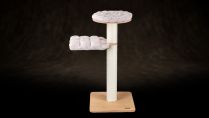


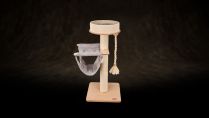

Cat tree for cats EX-P-3

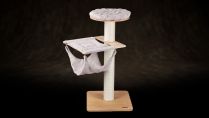


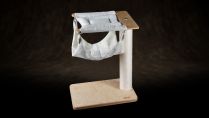

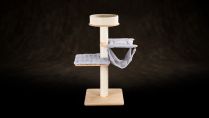
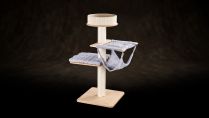


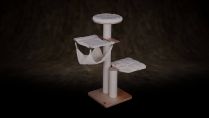
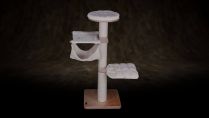
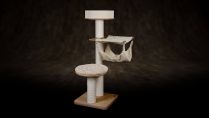
Cat tree for cats EX-0A

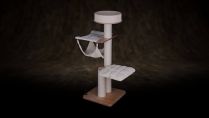
Cat tree for cats EX-0B
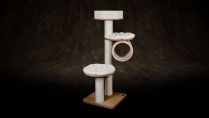

Cat tree for cats EX-0C

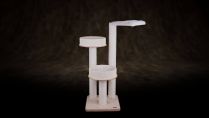
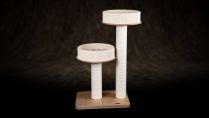
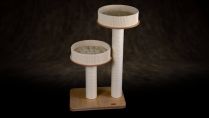
Cat tree for cats Ex-1

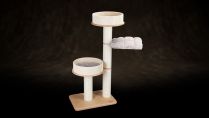
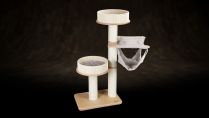
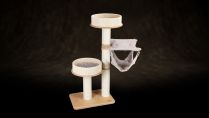
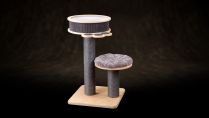


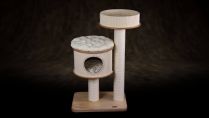
Cat tree for cats Ex-2
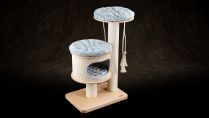

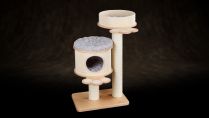
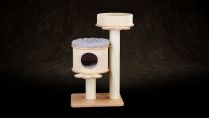


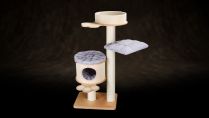

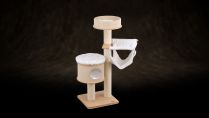


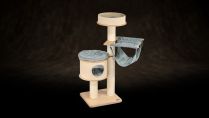
Cat tree for cats EX-2A-1

Cat trees for medium and large cat breeds
Cat trees for medium and large cat breeds form Rufi’s largest and most varied collection of wooden structures. The range includes simple models with one long scratching post as well as tall, multi-level cat trees fitted with platforms, hammocks, houses, tunnels, round beds and spacious resting areas.
This broad selection makes it possible to choose a cat tree according not only to the animal’s size, but also to its age, weight, mobility, activity and individual habits. A calm cat that mainly rests and observes the room has different requirements from an active animal that climbs vigorously, jumps between levels and uses several scratching surfaces.
Models in this category combine varnished wooden components, sisal-wrapped posts and textile resting areas. Individual cat trees differ in height, base dimensions, post length and placement, number of levels and the types of beds provided.
A cat tree suited to the animal’s actual needs
The descriptions “medium-sized cat” and “large cat” should be treated as practical guidance rather than a rigid classification. Two cats of the same breed may differ considerably in weight, body length, temperament and mobility. A cat tree should therefore be selected according to the actual needs of the individual animal.
This collection may include suitable models for British Shorthairs, Bengals, Ragdolls, Siberians, Norwegian Forest Cats and larger domestic cats. Some structures may also work well for several smaller cats, particularly when they offer a number of separate resting areas.
Before selecting a model, check not only its total height but also the dimensions of the platforms, hammocks, houses and round beds. The cat should be able to lie down freely, turn around and move comfortably between the successive levels.
What makes a sturdy cat tree stable?
A sturdy cat tree should not be judged only by its weight, base dimensions or the thickness of a single post. Stability results from the way the entire structure works together: the design of the base, the position of the support points, the relationship between height and width and the quality of every connection.
A cat does not load a structure statically. Jumping onto a platform, climbing a post or changing direction suddenly generates forces greater than the animal’s body weight alone. The taller and more active the cat, the more important the correct distribution of these loads becomes.
- The base should be suited to the height and layout of the complete structure.
- The posts must provide scratching surfaces and correctly transfer loads between levels.
- Platforms and beds should be arranged without creating excessive leverage on one side.
- Connections must remain rigid during climbing, jumping and energetic play.
- Assembly should follow the instructions, with all components checked and tightened periodically.
A good, sturdy cat tree should therefore be assessed as a complete system rather than as a collection of individual parts.
What is the best cat tree?
Customers frequently ask which is the best cat tree. There is no single model that is best for every animal and every home. The best cat tree is one correctly matched to the cat’s size, activity, preferred resting style and the space available in the room.
For a calm cat, the best option may be a lower model with a long post and one spacious bed. An active cat will usually make better use of a tall structure with several levels, long sisal surfaces and different climbing routes. In a multi-cat home, separate resting places and the ability for animals to pass one another become particularly important.
When looking for the best cat tree, consider the following questions:
- How large and heavy is the cat?
- Does it enjoy climbing high or usually remain on lower levels?
- Does it prefer open platforms, hammocks, houses or deep round beds?
- Will the structure be used by one cat or several animals?
- How much space is available for the base and components extending beyond it?
- Is the cat young and active or older and less mobile?
Only after considering these points is it possible to identify the model that will genuinely be the best cat tree for a particular animal.
Long sisal posts for scratching and stretching
Scratching is a natural feline behaviour. It supports claw maintenance, stretches the muscles and leaves both scent and visual marks. The scratching area should therefore be easy to access and sufficiently long.
An adult cat should be able to raise its front legs and extend its body fully. A short post forces the animal into a crouched position and may be considerably less attractive than the side of a sofa, an armchair or another tall item of furniture.
Many cat trees in this collection use posts with a diameter of 14 cm, wrapped in durable sisal rope. Models differ in the length and placement of their posts, making it possible to choose a structure for a calm cat or for an animal that climbs intensively.
Platforms, hammocks, houses, tunnels and round beds
A well-designed cat tree is not used only for scratching. For many animals it becomes their main place for sleeping, resting, playing and observing the home. The type and size of the beds are therefore as important as the sisal surfaces.
Platforms and open beds
Open platforms suit cats that like watching the room and need easy access to the next level. They should be wide enough for the animal to lie down comfortably and turn around safely.
Single and double hammocks
Hammocks adapt to the shape of the body and are often preferred by cats that enjoy soft, slightly enclosed resting places. A double hammock can provide a more sheltered space or two separate resting levels.
Houses and tunnels
A house or tunnel provides a quieter, partly enclosed retreat. It may be particularly attractive to cats that need to withdraw from activity elsewhere in the home.
Round beds with raised sides
A round bed enables the cat to rest its back or head against a soft edge. Check the internal diameter before choosing, as this determines the actual usable area available to the animal.
A cat tree for one cat or a multi-cat household
When choosing a cat tree for one animal, the decision can focus on its individual preferences. In a multi-cat household, the structure should offer several separate resting areas and more than one possible movement route.
The highest platform or favourite hammock may become a resource over which cats compete. A large cat tree with several full-sized beds allows each animal to find its own place.
The arrangement of levels also matters. A cat resting higher up should not completely block the only route down. Structures with additional platforms and several movement directions may work better for a group of cats with different ages and temperaments.
Low, tall and multi-level cat trees
The largest cat tree is not always the best choice. A lower model with a long post and comfortable bed may be sufficient for a calm animal or one that does not enjoy climbing high.
Tall cat trees are suitable for active cats that like observing the room from above and using successive levels for climbing. Check, however, that the route upwards and downwards is appropriate for the cat’s mobility.
An older cat may benefit from a model with shorter distances between platforms. A young and agile animal will normally make fuller use of wider gaps and opportunities for longer jumps.
Varnished wood and replaceable textile components
Cat trees in this category combine varnished hardwood plywood components with sisal rope and soft resting surfaces. The visible wood gives the construction a clean appearance and makes it easier to coordinate with the room.
Varnished surfaces can be vacuumed and wiped regularly. Depending on the model, beds may be fitted with removable covers, cushions or padded inserts that are easier to clean or wash in accordance with the care instructions.
Replaceable covers also make it possible to refresh the cat tree after several years without replacing the complete wooden structure.
A cat tree that suits the interior
A cat tree is usually a large and clearly visible part of the room. Its finish therefore matters alongside its functionality.
The choice of wood colour, sisal mat, rope and textile material makes it possible to coordinate the construction with furniture, flooring and other interior elements. Appearance should not, however, be the only consideration. Select the correct layout and size first, and then choose the colour scheme.
How to measure the space for a cat tree
Before ordering, check the complete dimensions of the selected model. The base size alone does not always describe the space required. Hammocks, platforms, tunnels and beds may extend beyond its outline.
Leave sufficient room around the structure for the cat to jump on and off safely. A tall model positioned directly next to an opening door, fragile objects or furniture that may be struck by protruding components may not be practical.
When measuring, consider:
- the base dimensions;
- the total width and depth of the construction;
- rotating elements and components extending beyond the base;
- the room required for assembly;
- the space the cat needs to enter and leave the structure freely.
Cat trees for exceptionally large cats
This category provides a broad selection for medium and large cats. If the construction is intended for an exceptionally heavy Maine Coon, a particularly large animal or several large cats using it simultaneously, compare our EX-MAX and EX-KAK cat trees for large cats.
Specialist collections for the largest cats use enlarged resting areas and more substantial posts. This does not mean that every large cat requires the biggest available model. The decision should reflect the animal’s actual weight, body length and use of the structure.
Floor-to-ceiling cat trees for medium and large breeds
When the main priority is to use the full height of the room, explore our floor-to-ceiling, tension-mounted cat trees for medium and large breeds. These structures are supported at the ceiling and form a vertical route for climbing and resting.
A freestanding cat tree is generally easier to reposition, while a tension-mounted model can provide more levels with a comparatively small base. The right option depends on the room layout and the cat’s preferences.
How to choose a sturdy cat tree
Before deciding, compare several essential characteristics:
- length of the scratching surfaces – the cat should be able to extend its whole body;
- bed dimensions – consider the genuinely usable area;
- layout of the levels – it should match the cat’s mobility and movement;
- stability of the complete structure – not only its weight or base size;
- number of resting areas – particularly important in a multi-cat home;
- cleaning options – removable covers and access to replacement parts;
- complete dimensions – including components extending beyond the base.
The best cat tree is not necessarily the largest or most complicated model. It is a structure the cat will actually use for scratching, climbing, resting and observing its surroundings.
Choose a cat tree for a medium or large cat
Compare the available models and choose a sturdy cat tree suited to the animal’s weight, body length, age, mobility and preferred way of resting. This collection includes simple scratching structures as well as extensive furniture for one cat or a complete group.
A properly selected cat tree can become one of the most frequently used places in the home — a space for claw care, exercise, play, sleep and quiet observation of the surroundings.


