 English
 Deutsch
 Czech
Czech
 Polski
 Italian
 French

Cat trees – models with a cabinet combine a full-sized structure for scratching, climbing and resting with a practical wooden piece of furniture. Depending on your needs, the cabinet can contain a litter box, provide an enclosed hideaway or bed, or store litter and cat accessories. Choose a stable cat tree with a cabinet suited to the animal’s size, the intended use of the interior and the available room.
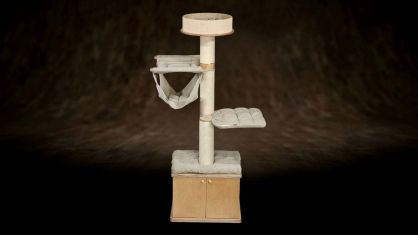
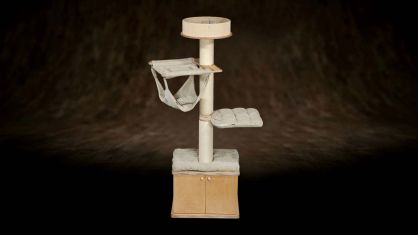
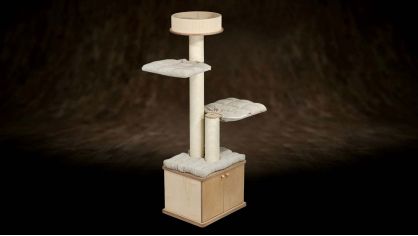
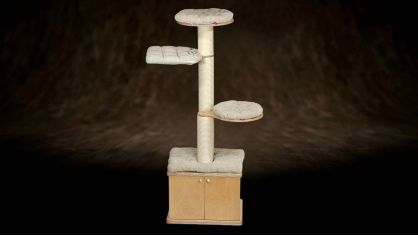
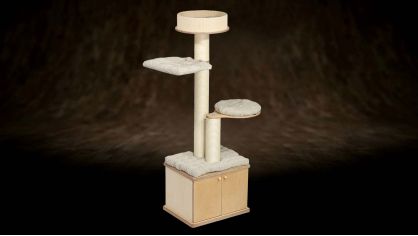
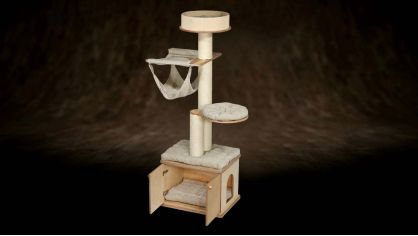
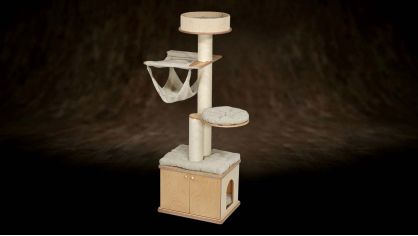
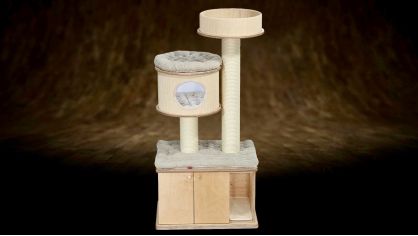
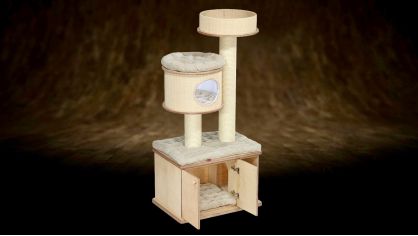
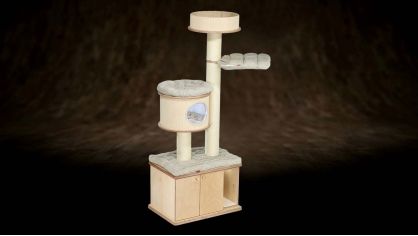
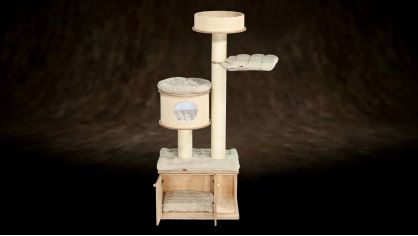
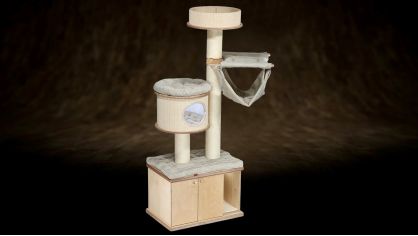
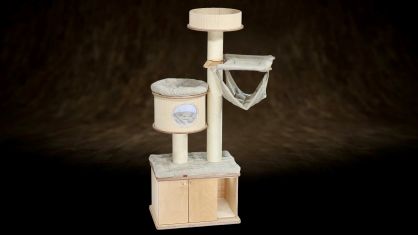
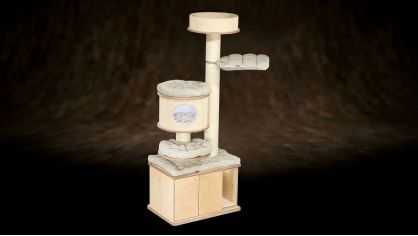
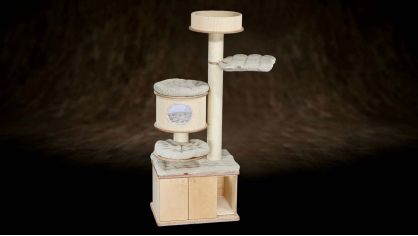
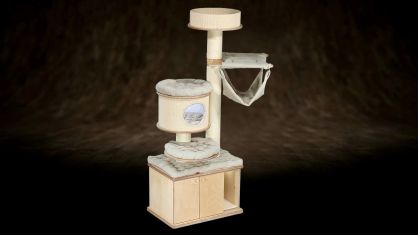
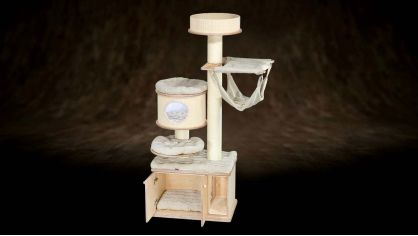
Cat trees – models with a cabinet
Cat trees – models with a cabinet combine a functional multi-level cat tree with a spacious wooden enclosure in the lower part of the structure. Above the cabinet there may be sisal posts, platforms, hammocks, raised round beds and other resting areas, while the interior can be arranged according to the needs of the cat and household.
The cabinet can serve as a litter box enclosure, an enclosed hideaway, a quiet bed or storage for litter and cat accessories. A cat tree with a cabinet therefore combines several pieces of feline equipment in one coherent construction and helps organise the cat’s area in the home.
This is not an ordinary cabinet with a randomly selected cat tree placed on top. The lower section is an integral structural component, contributes to the overall proportions, provides broad support and creates additional usable space. Both the upper cat tree and the dimensions, entrance and internal layout of the cabinet must therefore be considered.
A cat tree and practical cat furniture in one
A conventional cat tree primarily provides scratching surfaces and places for climbing and rest. A model with a cabinet adds an enclosed space at floor level.
Depending on the model and the way the interior is arranged, the cabinet can be used as:
- a litter box enclosure and more discreet toilet area;
- an enclosed bed for a cat that prefers protected spaces;
- a quiet hideaway separated from household movement;
- storage for litter and accessories used in everyday care;
- a protected area for a mother cat and kittens when its size and arrangement suit their needs.
Determine the main purpose before selecting a particular product. Different features matter when the cabinet will contain a litter box, provide a bed or be used exclusively for storage.
A cat tree with a litter box cabinet
One of the most popular uses is a cat tree with a litter box enclosure. It allows the toilet tray to be placed inside a wooden cabinet while retaining a full-sized scratching and resting structure above it.
This arrangement can help to:
- reduce the direct visibility of the litter box;
- separate the toilet area from the rest of the room;
- organise the space intended for the cat;
- retain some litter carried on the paws;
- provide a more enclosed toilet area;
- combine the litter box and cat tree in one part of the home.
An enclosure does not guarantee the complete elimination of scattered litter or odours. The result depends on the type of tray and litter, cleaning frequency, room ventilation and the cat’s individual behaviour.
Not every cat accepts a toilet inside enclosed furniture. The animal must be able to enter, turn around and leave freely. In a multi-cat home, the only exit should not be easy for one animal to block.
Will the litter box fit inside the cabinet?
Compare the actual litter tray with the usable internal dimensions of the selected cabinet. External furniture measurements do not reveal how much room remains after accounting for the walls, hinges, vestibule and door opening system.
Check:
- the width, depth and height of the litter tray;
- the usable internal cabinet dimensions;
- the size and position of the cat entrance;
- the height of the tray including its rim or cover;
- the space required for the cat to enter and turn;
- whether the tray can be removed conveniently for cleaning;
- the access required for scooping and replacing litter.
Allow some free space around the tray. A litter box that fits almost exactly between the cabinet walls may be difficult to remove and may leave insufficient room for the cat.
A standard cabinet or a model with a vestibule?
The collection includes standard single-space cabinets and designs with a separate vestibule. Both can perform several functions, but the cat moves through them differently.
Standard cabinet
In the standard version, the cat enters the main interior directly. It can work as a hideaway, bed, storage cabinet or enclosure for a correctly sized litter box. The simple layout also preserves more of the available internal area.
Cabinet with a vestibule
In a model with a vestibule, the cat first enters a separate passage and then moves into the main section. When used as a cat litter box cabinet, this longer exit route may help remove some litter from the paws before the animal leaves the furniture.
The vestibule adds functionality but reduces the size of the main internal section. Check the usable litter box or sleeping area particularly carefully.
Reducing scattered litter
Litter may be carried out on the paws or thrown from the tray while the cat digs. An enclosure can reduce how far it spreads because some granules remain inside the cabinet or vestibule.
The result depends on:
- the type and granule size of the litter;
- the height of the tray walls;
- the entrance and vestibule arrangement;
- the cat’s digging behaviour;
- the use of an additional litter-catching mat;
- regular vacuuming of the cabinet interior.
This should be treated as a possible benefit rather than an unconditional guarantee.
A cabinet for litter and cat accessories
When the interior is not intended for the cat, it can provide practical storage for items used in daily care. Accessories remain close to the cat tree, and fewer separate storage units are required in the room.
The cabinet may hold:
- sealed packages of litter;
- a litter scoop and waste bags;
- brushes, combs and claw clippers;
- spare toys;
- clean cushions and textiles;
- sealed food or treat containers;
- products used to clean feline equipment.
Food and small objects should remain in tightly closed containers. If the cat can access the cabinet, do not store cleaning agents or objects that it could chew or swallow.
The same space should not simultaneously serve as a litter box enclosure and food storage. Select one hygienically appropriate purpose for the interior.
An enclosed hideaway or quiet bed
Not every cat prefers to rest on the highest platform. Some regularly choose enclosed places closer to floor level. The cabinet can then be arranged as a hideaway or additional sleeping area.
A suitably sized cushion or mattress may be placed inside, provided that the cat retains enough room to enter, turn and lie down. Soft furnishings should not block the entrance or restrict airflow.
Combining a protected area below with hammocks, platforms and elevated beds above gives the cat a choice between different resting environments.
Use in a multi-cat household
A cat tree with a cabinet may be used by several cats, but the number of animals should correspond to the number of full-sized beds and the layout of the structure.
Consider:
- the number of resting places above the cabinet;
- the dimensions of the hammocks, platforms and raised beds;
- the number of accessible scratching surfaces;
- whether the upper structure can be approached from several directions;
- whether a cat inside the cabinet has a clear exit;
- the relationships between the individual animals.
When the cabinet contains a litter box, it should not automatically replace all other trays in a multi-cat home. The number and placement of toilets must suit the whole group.
A protected area for a mother cat and kittens
Under appropriate conditions, the interior may provide a quiet protected area for a mother cat and kittens. This does not mean that every cabinet is a ready-made birth box.
Before using it in this way, assess:
- the internal space and entrance size;
- the owner’s access for regular checks;
- how the cabinet opens;
- cleaning possibilities;
- the safety of all textiles and furnishings;
- room temperature, quietness and ventilation;
- the individual requirements of the mother and litter.
A breeder must be able to inspect the animals quickly. A dedicated birth box may be more suitable when specialised access, dimensions or hygiene solutions are required.
A full-sized cat tree above the cabinet
The cabinet is only one part of the product. Above it stands the actual cat tree, which should provide long scratching surfaces, comfortable resting places and a clear route between levels.
Depending on the model, it may contain:
- long posts wrapped in sisal rope;
- platforms for climbing and observation;
- single or double hammocks;
- raised round beds;
- a selectable top resting area;
- additional components increasing the number of levels.
Do not focus exclusively on the cabinet. The upper construction must also suit the animal’s size, weight and activity.
Stability of the complete construction
The wooden cabinet creates a broad, substantial lower section. Its base and top panel are made from 36 mm plywood, while the remaining cabinet components use 18 mm plywood.
Overall stability depends on:
- the area and rigidity of the lower section;
- the position of the structural posts above the cabinet;
- the relationship between height, width and depth;
- the position of beds relative to the support points;
- the rigidity of platforms and connections;
- correct assembly;
- positioning on a level, stable floor.
The presence of a cabinet does not automatically make every model suitable for every cat. Select the structure for the expected loads and inspect all connections periodically.
Plywood and varnished wooden surfaces
The plywood cabinet forms a rigid enclosure suitable for daily use as cat furniture. Varnished surfaces can be vacuumed and wiped in accordance with the product care instructions.
When used for a litter box, spilled litter and dirt should be removed regularly. The tray must still be removed and washed separately from the cabinet.
If the interior is used as a bed, removable textiles that can be cleaned or washed are the most practical choice.
Functional and visual personalisation
The available configuration depends on the model but may include the textile type, top bed, wood colour, rope and sisal mat colours, internal finish and components fitted beneath the base.
Configure the product in this order:
- determine the primary purpose of the cabinet;
- check the required internal dimensions;
- match the upper cat tree to the animal’s size;
- select the resting areas and textiles;
- coordinate the colours with the room.
The appearance should not take priority over correct dimensions and a functional layout.
Where should a cat tree with a litter box cabinet stand?
A model containing a litter tray should stand in a quiet location while remaining easy for the owner to clean. Do not place it in a narrow corner if this prevents the doors from opening fully or the tray from being removed.
Also consider:
- access to all scratching surfaces;
- space for jumping onto platforms and hammocks;
- free opening of the cabinet;
- distance from food and water bowls;
- clearance from doors, radiators and furniture;
- easy vacuuming around the product.
The location should reflect the habits of the individual cat. Some avoid toilets in busy passages, while others dislike areas too remote from the household.
A cabinet cat tree or a large playground?
A model with a cabinet is appropriate when an enclosed floor-level area is required in addition to scratching and resting places. When the priority is the greatest possible number of routes, platforms, tunnels and open play areas, compare our cat trees – playgrounds for cats.
Both groups include large structures, but they answer different needs. The cabinet model integrates enclosed usable furniture, while the playground focuses primarily on activity and numerous levels.
How to choose the right cat tree with a cabinet
Before ordering, compare:
- the intended use of the cabinet;
- its internal measurements and entrance size;
- the dimensions of the litter box, mattress or stored objects;
- the door opening system and access to the interior;
- the height and arrangement of the upper cat tree;
- the size of hammocks, platforms and beds;
- the length and accessibility of scratching surfaces;
- the complete width, height and depth;
- the cat’s weight, body length and activity;
- the number of animals using the structure;
- available finishes and cleaning requirements.
The best cat tree with a cabinet must suit the animal, the intended purpose of the interior and the conditions in the room. Additional functions are useful only when each one has appropriate dimensions and remains easily accessible.
Compare our cat trees – models with a cabinet and choose a construction combining a full-sized cat tree with a litter box enclosure, hideaway, bed or practical storage. Other wooden models are available among our exclusive cat trees made of varnished wood.


