 English
 Deutsch
 Czech
Czech
 Polski
 Italian
 French

Cat trees – cat-shaped models combine functional sisal scratching surfaces, enclosed hideaways and comfortable resting places with the distinctive outline of a cat. The collection includes small, medium and large cat-shaped cat trees as well as versions fitted with additional beds. Choose an original cat tree suited to your cat’s size, resting habits and the design of the room.

Cat tree -Small cat
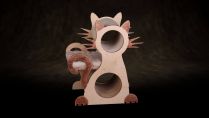
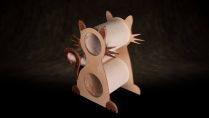
Cat tree - Medium cat - version 1
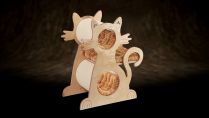

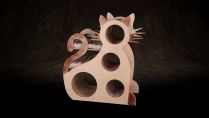
Cat tree - Big cat
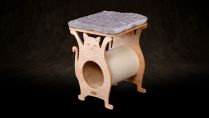

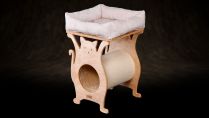
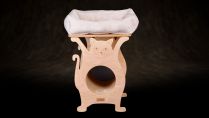


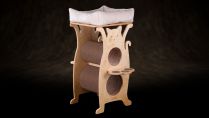


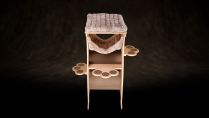
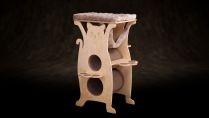
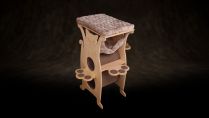
Cat trees – cat-shaped models
Cat trees – cat-shaped models are structures in which a functional scratching area, enclosed hideaways and resting places are combined with the recognisable outline of a cat. The individual cylindrical sleeves, platforms and wooden components form a feline silhouette, making the construction both a practical space for the animal and a distinctive item of interior furnishing.
Each cat-shaped cat tree provides sisal-covered surfaces that can be used for scratching and stretching. The interiors of the cylindrical sections form partly enclosed areas where a cat can rest, hide or observe the room through the entrances.
The collection includes constructions that differ in size, number of sleeves, platform arrangement and additional beds. You can choose a compact model for a smaller animal or a more extensive large cat-shaped cat tree with several hideaways and resting places.
A cat tree and decorative piece of cat furniture in one
Conventional cat trees are usually built from upright posts and open platforms. In this collection, cylindrical sleeves form the main body of the structure and are arranged to represent the head, body and other parts of a cat’s silhouette.
A cat tree in the shape of a cat can therefore perform several functions:
- provide vertical and curved scratching surfaces;
- create enclosed hideaways inside the sleeves;
- offer platforms and additional resting places;
- allow the cat to observe the room from different heights;
- serve as a decorative piece of furniture with a clear feline character.
The original appearance does not replace practical requirements. The actual product dimensions, hideaway size, accessible scratching area, stability and suitability for the cat’s build remain the most important selection criteria.
How is the characteristic cat shape created?
The form results from the arrangement of cylindrical sleeves, platforms and connecting elements. The sleeves may form the body, head or side sections, while wooden platforms complete the outline and provide additional places for sitting and resting.
Smaller models use one main sleeve and decorative elements. Larger structures combine several sleeves of different diameters with additional platforms, providing more usable space.
Do not consider the external appearance alone. The space inside the sleeves, entrance dimensions, usable platform area and the ease of movement between the components are more important to the cat.
Sisal sleeves as scratching surfaces
The outer surfaces of the cylindrical sections are intended for scratching. Their rounded shape allows the cat to approach the construction from several directions and select a comfortable position.
A sufficiently large sisal area supports regular scratching, full-body stretching and scent and visual marking. Access from several sides is particularly useful when more than one cat uses the tree.
Before positioning the product, make sure that a wall or nearby furniture will not obstruct a significant part of the scratching surface. A cat tree should be placed so that the animal can use its key functional areas freely.
Internal hideaways and enclosed resting places
The interiors of the cylindrical components create hideaways where the cat can rest away from household activity. The entrances also allow it to observe the room without leaving the enclosed space.
Some cats use these places mainly for sleeping. Others treat the sleeves as short tunnels, observation points or play areas. Usage depends on temperament, age and individual preference.
The internal dimensions should allow the cat to enter, turn around and lie down comfortably. Compare the diameter and length of each hideaway with the animal’s actual size.
Small, medium and large cat-shaped cat trees
The collection contains models described as small, medium and large. These are not three sizes of an identical construction. They differ in layout, number of sleeves, height, width, platform dimensions and number of resting areas.
Small cat-shaped cat tree
A compact model may suit a kitten, a smaller adult cat or serve as an additional scratching place in another room. It takes up less space while still providing a scratching surface and an enclosed hideaway.
When buying for a kitten, consider its expected adult dimensions. A very compact model may be appropriate during the first months but later become too small as the main resting place.
Medium cat-shaped cat tree
A medium model may combine several sleeves with an additional platform, providing more resting and movement options. It suits cats that need more space than the smallest version but do not require the dimensions of the largest structure.
Large cat-shaped cat tree
A large model has a more extensive outline, several sleeves and additional usable surfaces. It may provide a larger cat or several animals with more independent hideaways and resting places.
The word “large” should not replace a review of the actual measurements. Compare the sleeve, platform and entrance dimensions with the cat’s body length and weight.
Cat-shaped cat trees with additional beds
Some models are available with extra resting areas. These increase the functionality of the construction and give the cat a choice between an enclosed sleeve and a more open bed.
In a multi-cat household, an additional bed may reduce situations in which several animals try to occupy the same place. It does not automatically make every model suitable for any number of cats.
Consider the number of full-sized resting places, their arrangement and whether the cats can enter and leave without blocking one another.
A cat tree for one or several cats
A cat-shaped cat tree can be used by one animal in several ways. The cat may scratch the outer surface, rest inside a sleeve or watch the room from a platform.
For several cats, consider:
- the number of available hideaways;
- the sleeve and entrance dimensions;
- the number of open resting places;
- access to the sisal surfaces from several sides;
- stability during simultaneous use;
- the relationships between the animals.
Cats that enjoy sleeping together may share larger components. Animals that prefer separate territories require several independent areas.
Stability and structural proportions
The unusual shape requires appropriate weight distribution and support points. Stability depends on the size of the base, the placement of sleeves and platforms, connection rigidity and the relationship between the width and height of the complete structure.
The model must suit the cat’s weight and activity. A larger animal can create substantial forces when jumping onto the tree, leaving a sleeve or changing direction suddenly.
After assembly, position the product on a level, stable surface and check every connection. Their tightness should be inspected periodically during use.
Varnished wood, sisal and interior finish
The structures combine varnished wooden components with sleeves covered externally in scratching material. The interiors have a softer finish and can serve as enclosed resting places.
The visible wood gives the construction an organised appearance, while the extensive sisal surfaces emphasise its practical role. A wooden cat-shaped cat tree can therefore serve as both equipment for the animal and a decorative element of the room.
Colours matched to the room
The appearance can be coordinated with the interior by choosing from the available wood finishes, scratching surface colours and materials used inside the sleeves. The exact personalisation options depend on the model.
Select the correct size and functional arrangement first, and the colour scheme second. Even the most attractive design will not be suitable if its hideaways and platforms are too small for the cat.
Where should a cat-shaped cat tree be placed?
Because of its decorative form, the structure can be placed in a visible part of the living room or another frequently used space. This also suits cats that want to observe daily household activity.
Leave free access to the entrances and scratching surfaces. Allow enough room for jumping onto the platforms and leaving the sleeves comfortably.
Do not position the cat tree where it interferes with doors or where nearby furniture blocks important parts of the construction.
How to choose the right cat-shaped cat tree
Before ordering, compare:
- the cat’s size and weight;
- the diameter and length of the sleeves;
- the entrance dimensions;
- the number of hideaways and additional beds;
- the actual usable platform area;
- the total width, height and depth;
- stability and the distribution of support points;
- the number of cats using the construction;
- colour options and cleaning requirements.
The best cat tree should not be selected only for its appearance. It must provide correctly sized hideaways, accessible scratching surfaces and comfortable resting places.
For vertical designs in which a cylindrical tube is the main functional component, also explore our cat trees – towers and tubes.
Compare our cat trees – cat-shaped models and choose a structure suited to the animal’s size, habits and the available room. Other collections can be found among our exclusive cat trees made of varnished wood.


