 English
 Deutsch
 Czech
Czech
 Polski
 Italian
 French

Cat trees – towers and tubes are vertical structures combining a large scratching surface with internal hideaways, beds and climbing levels. The terms “cat tower” and “cat tube” describe the same type of cat tree in this collection. Choose a simple multi-level tube or a larger cat tower combined with platforms, hammocks and additional resting areas.


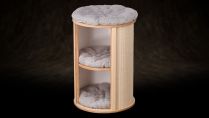
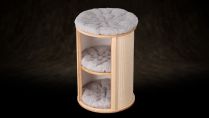
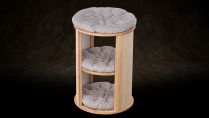
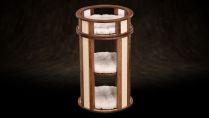
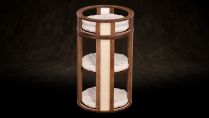
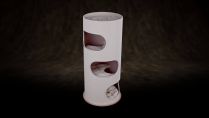
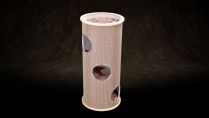
Cat tree for cats - tube 3 levels - version 1
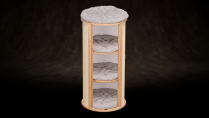

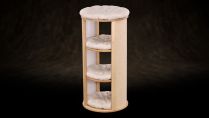
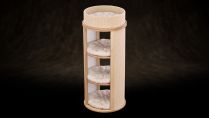

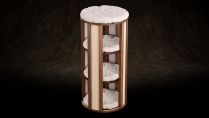
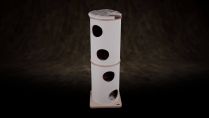

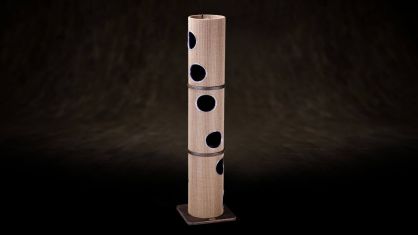

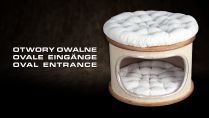
Cat tree for cats tube TDR
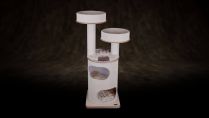

Cat tree for cats tube TDR-2
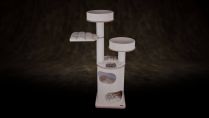

Cat tree for cat tube TDR-2H-POJ
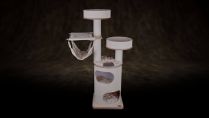

Cat tree for cats Tube TDR-2H-POD
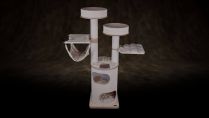

Cat tree for cats tube TDR-2H-2
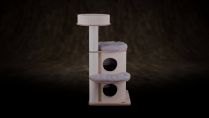

Cat tree for cats Tube (size big) TP-1/2
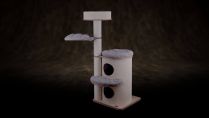

cat tree for cats Tube TP-2/2


Cat tree for cats Tube TP-3/2
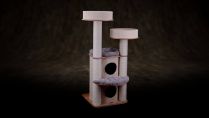
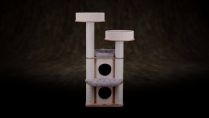
Cat tree for cats Tube (size big) TP-4/2
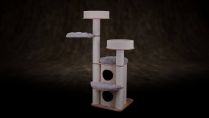

Cat tree for cats Tube TP-5/2

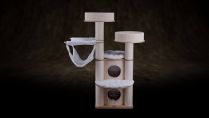
Cat tree for cats Tube TP-6/2
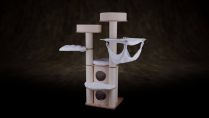

Cat tree for cats Tube TP-7/2

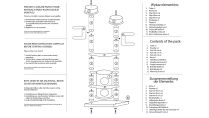
Cat tree for cats Tube TP-8/2
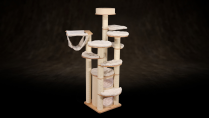

Cat tree for cats tube TP-9/2

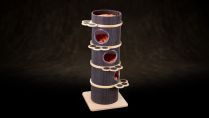
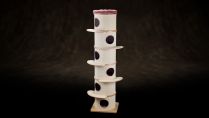
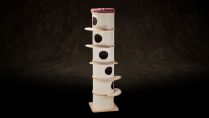

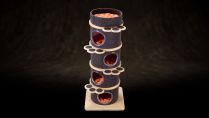


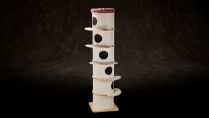
Cat trees – towers and tubes
Cat trees – towers and tubes are distinctive vertical structures combining scratching surfaces, enclosed hideaways, internal levels and comfortable resting places. The collection includes independent two- and multi-level tubes as well as larger cat trees fitted with platforms, hammocks, round beds and conventional sisal-wrapped posts.
The terms cat tower and cat tube describe essentially the same type of product. Some customers refer to the cylindrical structure as a tube, focusing on its shape and enclosed interiors. Others search for a cat tower because its height, multiple levels and climbing function are more important to them.
Both terms are used throughout this description because they refer to the same group of cat trees. The choice of a specific model should be based on its height, internal diameter, number of levels, entrance dimensions and the cat’s preferred way of resting rather than on the name alone.
A cat tower – vertical scratching, hiding and resting
A cat tower uses the available space primarily in a vertical direction. Its cylindrical body can be divided into several internal floors, while openings positioned at different heights allow the cat to enter, move between levels and observe the room.
The outside of the tower is also a large scratching surface. One tower-style cat tree can therefore provide several essential functions:
- scratching on a vertical sisal surface;
- climbing on the outside of the structure;
- hiding in an enclosed interior;
- resting on internal shelves or the top bed;
- observing the surroundings from a higher level.
A tower may be a compact independent cat tree or the central element of a larger construction. More extensive models combine a tube with additional posts, platforms, hammocks and round beds, creating a more varied movement route.
A cat tube – another name for the same construction
A cat tube is usually a cylindrical body covered externally with a sisal mat and fitted with entrances leading to internal resting areas. Depending on the model, it may have two, three or more levels, and its top may provide an additional bed.
The phrase “cat tube” emphasises the shape, while “cat tower” highlights the vertical multi-level arrangement. They are not separate types of product. A multi-level tube is also a tower, and a tower with a cylindrical body remains a cat tube.
Expressions such as tube cat tree, tower-style cat tree, scratching tower and cat tube with beds can therefore describe very similar or identical constructions.
Why do cats enjoy towers and tubes?
Cats often seek places that allow them to hide while retaining control over their surroundings. The inside of a tube creates a partly enclosed area, while the entrances and top bed allow the animal to watch the room.
Individual cats may use a tower differently. One may choose the highest point and treat it mainly as an observation platform. Another may sleep inside and use the exterior for regular scratching and stretching.
A cat tower may be particularly suitable for animals that:
- enjoy enclosed hideaways;
- rest at several different heights;
- prefer vertical scratching surfaces;
- climb and jump onto elevated places;
- need a quiet resting area of their own.
A cat tower compared with a conventional post cat tree
A conventional cat tree is generally based on separate posts and open platforms. A tower or tube has a compact body containing several hideaways and resting levels.
Neither solution is always better. An open cat tree may suit a cat that wants to watch the room continuously and move across broad platforms. A tube may be more attractive to an animal that prefers enclosed spaces.
This category also contains models that combine both solutions. A cat tower can form the central section of a larger cat tree, while surrounding posts, hammocks and platforms provide additional routes and beds.
How to choose the height of a cat tower
The height should match the animal’s activity and mobility. A low tube may serve mainly as a hideaway, scratching surface and low bed. A taller multi-level tower provides more climbing and observation opportunities.
Before ordering, check:
- the total height of the structure;
- the number of internal floors;
- the distances between entrances and levels;
- the route to the top bed;
- the cat’s age, mobility and habits;
- the free space above and around the tower.
The tallest tower is not always the best choice. An older or less mobile cat may use a lower model with easily accessible entrances more willingly. A young, active animal may make fuller use of a multi-level construction.
Diameter and actual internal space
When choosing a tube, consider not only its height but also the internal diameter, entrance dimensions and the usable area of each shelf. These measurements determine whether the cat can enter comfortably, turn around and lie down.
A small cat may use a compact tower easily. For a larger or heavier animal, check the specifications of the individual product carefully. The description “large tube” does not replace a comparison between the dimensions and the cat’s body length and build.
For a more conventional structure with wide open beds, also explore our cat trees for medium and large breeds.
A cat tower for one or several cats
A multi-level cat tower can provide several resting places while taking up a relatively small floor area. This does not mean that every tube is suitable for any number of animals.
In a multi-cat home, consider:
- the number of full-sized internal levels;
- the dimensions and arrangement of the entrances;
- whether cats can pass one another;
- access to the top bed;
- stability during simultaneous use;
- the relationships between the individual cats.
When cats compete for the highest places or require several independent movement routes, a larger construction may be more suitable. Additional options are available among our cat playgrounds.
The external scratching surface
A major advantage of a cylindrical structure is the extensive scratching area around its outer surface. The cat can approach it from different sides, and taller models allow more of the body to be extended.
Check how much of the body is intended for scratching and whether that surface will remain accessible from the direction in which the cat is most likely to approach. On selected models, sisal-covered components can be replaced later, refreshing an intensively used cat tree without replacing the complete tower.
Internal levels and movement routes
A multi-level tube should allow the animal to move comfortably between floors. Both the external entrances and the openings in the internal shelves affect how the cat uses the construction.
When comparing models, check:
- whether all levels are interconnected;
- whether the cat can enter at different heights;
- whether the top is closed or includes an internal passage;
- whether cushions and resting inserts can be removed for cleaning;
- whether the internal route suits the cat’s size and mobility.
Some cats use the interior mainly for sleeping, while others treat it as a route leading to the top. The best model should match the behaviour of the individual animal.
Modular cat tubes and expansion options
The collection also includes modular cat tubes. Depending on the selected system, the construction may offer alternative top sections, additional levels or components that make access easier.
A modular model can be suitable when a compact construction or adjustable height is important. Before ordering, check which components are available for the particular version and how adding them affects the total height and stability of the tower.
The top bed of a cat tower
The top of a tower is often one of the most popular places. Depending on the model, it may be finished with a flat bed, cushion, raised round bed or an element containing a passage from inside the tube.
Check the genuinely usable resting area rather than only the external dimensions. When several animals will share the tower, also consider whether the lower levels provide equally attractive alternatives.
Stability and correct positioning
A compact form does not automatically make every tower suitable for every cat. Stability depends on the relationship between height and base size, the weight and arrangement of the components, connection quality and correct assembly.
Position the tower on a level, stable surface. Check all connections after assembly and inspect their tightness periodically. If the model includes shelves or hammocks extending beyond the base, include them when assessing the complete width and required space.
Where should a cat tube be placed?
A cat tube should stand where the animal naturally wants to spend time. This may be near a window, in the living room, close to the household’s seating area or beside furniture that the cat currently scratches.
Leave enough room for the cat to use every entrance and scratching surface. Do not position the tower so close to a wall or furniture that some of the openings become inaccessible.
Cleaning a cat tower or tube
The internal finish and type of cushions depend on the individual model. Before ordering, check which elements can be removed, how they should be cleaned and whether replacement parts are available.
The external sisal mat can be vacuumed regularly, while the wooden parts should be wiped according to the care instructions. Removable cushions and access to individual levels make it easier to remove hair from the interior.
How to choose the right cat tower
Before deciding, compare:
- the height and diameter of the tube;
- the number of levels and entrances;
- the actual size of the internal beds;
- the type of top section;
- the area intended for scratching;
- cleaning options and replaceable wear components;
- the full dimensions including additional shelves and hammocks;
- the cat’s size, age, mobility and habits.
Cat tower and cat tube are two names for the same functional concept. What matters is not which expression is used, but whether the particular cat tree provides suitable space for scratching, climbing, hiding and comfortable rest.
Compare the available structures and choose a simple multi-level tube or a larger tower-style cat tree. Other wooden designs are available in the main collection of exclusive cat trees made of varnished wood.


