 English
 Deutsch
 Czech
Czech
 Polski
 Italian
 French

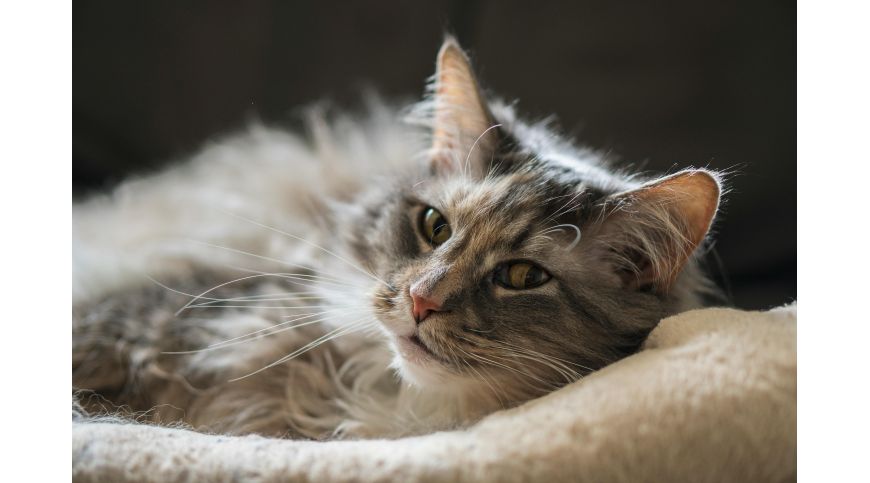
How to Choose a Cat Tree for a Maine Coon: A Complete Guide for Owners of Large Cats
The Maine Coon is one of the l a suitable cat tree requires careful consideration of much more than the height or appearance of the structure.
A good cat tree for a Maine Coon should allow the cat to scratch while fully stretched, climb, jump and rest comfortably. It must also safely withstand not only the weight of a resting cat, but also the forces generated when the animal jumps onto a platform, pushes off from a post or changes direction suddenly.
This does not mean, however, that every Maine Coon automatically needs the largest available MAX cat tree. Individual cats differ considerably in weight, body length, build and activity level. One cat may require a reinforced Maine Coon cat tree from the EX-MAX range, while another may be perfectly comfortable using a solid model designed for medium and large cat breeds.
In this guide, we explain how to match a cat tree to the genuine needs of an individual Maine Coon, how to assess its stability and durability, and why a large post diameter, a heavy base or a tall construction alone cannot guarantee safety.
Why does a Maine Coon need a properly selected cat tree?
A Maine Coon usually has a considerably longer body and more powerful build than an average domestic cat. The breed also matures relatively slowly, so a cat tree purchased for a young Maine Coon should be selected with the animal’s future adult size in mind.
Activity is equally important. Maine Coons are generally gentle and sociable, but many of them remain highly active. They enjoy climbing, watching their surroundings from an elevated position, playing and jumping onto a cat tree at speed. Some particularly energetic individuals use the structure as a vertical route for running, climbing, hunting games and sudden jumps.
The combination of considerable weight and activity places particularly high demands on a cat tree. A cat resting quietly on a platform mainly loads the structure with its body weight. When the same animal jumps onto the highest hammock, pushes off from a post or changes direction rapidly, the cat tree is subjected to additional dynamic and lateral forces.
In practice, a large and active male Maine Coon may even push a heavy cat tree across a smooth floor, particularly when the base stands on felt pads. This demonstrates why the weight of the product alone is not sufficient. The dimensions and rigidity of the base, post placement, centre of gravity, grip on the floor and the way the individual cat uses the structure all matter.
Assess the cat before choosing the model
When choosing a cat tree for a Maine Coon, the breed name should not be the only selection criterion. Two cats of the same breed may have completely different requirements. One may weigh approximately 6 kg, be calm and spend most of its time on the lower levels. Another may weigh more than 10 kg, have an exceptionally long body and climb intensively to the highest bed every day.
Before choosing a model, consider the following questions:
- How much does the cat currently weigh, and is it still growing?
- How long and heavily built is its body?
- Is the cat calm, moderately active or exceptionally energetic?
- Does it enjoy climbing vertical scratching posts?
- Does it jump onto the cat tree at speed?
- Does it prefer open platforms, hammocks, houses or elongated beds?
- Will the structure be used by one cat or several animals?
- Is the cat young and agile, or older and less mobile?
Only after considering these factors is it possible to determine whether the animal needs a specialist large cat tree for a Maine Coon from the MAX range or whether a well-designed cat tree for medium and large breeds will be sufficient.
A large Maine Coon cat tree: height alone is not enough
Height is important because many Maine Coons enjoy climbing and observing the room from above. However, a cat tree measuring 180 or 200 cm is not automatically a suitable choice.
A tall structure may still be uncomfortable or unstable if it has:
- a base that is too small or prone to bending,
- short sections of scratching post,
- small platforms and cramped beds,
- large components extending far beyond the base,
- poorly arranged support points,
- excessive distances between successive levels,
- weak connections or thin-walled tubes,
- an impractical route for climbing up and down.
For the cat, a practical route through the structure is more important than the total height alone. A large animal should be able to place all four paws securely, turn around on a platform and move safely between successive levels.
The total height of the cat tree must also be distinguished from the actual length of its scratching surfaces. A construction may be two metres tall, but if all of its posts are short and divided by small platforms, the cat may still have nowhere to stretch fully while scratching.
How long should a scratching post be for a Maine Coon?
A Maine Coon should be able to place its front paws high on the post and extend its entire body. Full-body scratching is not only part of claw maintenance. It also allows the cat to stretch the muscles of the back, shoulders and front legs.
This does not mean that every post in the construction must be exceptionally long. What matters is that at least one easily accessible section allows the cat to stretch fully. Structures in which several posts form a vertical climbing route can also work very well.
When assessing a scratching post, however, it is necessary to look much deeper than its length and external diameter.
Scratching posts for Maine Coons: diameter is only the beginning
A thick post looks solid and can genuinely provide a larger scratching area and improve the distribution of forces. The external diameter alone does not reveal how the post has been constructed.
Two posts with exactly the same external diameter may differ completely in durability. One may use a thick-walled tube, strong hardwood-plywood end plugs and a substantial threaded connection. Another may consist of a thin tube combined with lightweight plastic collars and a small nut.
Both products may look similar in photographs. The difference becomes apparent only during assembly and long-term use.
Thickness of the tube wall
The tube forms the internal skeleton of the scratching post. It should be rigid, compact and resistant to crushing and delamination. Rufi posts use tubes with walls at least 10 mm thick. This construction helps the post retain its rigidity and allows the end components to be securely fixed.
A tall Maine Coon cat tree should not rely on tubes with very thin walls. Even if the post appears wide, a thin tube may bend, crack or gradually tear around the mounting points.
Post ends and threaded connections
One of the most important and least visible elements is the plug closing the end of the post. In our constructions, these plugs are made from multi-layer hardwood plywood approximately 4 cm thick. An M10 claw nut is securely installed inside the plug.
Hardwood plywood transfers forces effectively in different directions, while the substantial thread allows the complete construction to be tightened firmly. This is particularly important in tall cat trees used by heavy animals, because the posts are repeatedly loaded during jumping and climbing.
A smaller connection is not necessarily unsuitable for a simple, low cat tree consisting of a base, one short post and a lightweight bed. The loads acting on a tall, multi-level construction are much greater, which is why we use M10 connections in large cat trees.
An M10 nut alone will not solve the problem if it is installed in a weak plastic collar or a thin tube. All components must work together as one structural system:
- a thick-walled tube,
- a solid end plug,
- a securely installed nut,
- a sufficiently strong bolt,
- a rigid platform or base,
- correct and firm assembly.
Further information about tubes, post ends, bolts and stability is available in our guide: How to Recognise a Truly Good Cat Tree.
What type of sisal rope is suitable for a large and powerful cat?
The description “natural sisal” does not provide enough information about the actual durability of a scratching surface. Rope diameter, the number of strands, fibre quality, tightness of the twist, tension during winding and the way the beginning and end of the rope are secured all matter.
For cat trees intended for intensive use, sisal rope approximately 11–12 mm in diameter and twisted from four main strands works particularly well. The rope should have a compact and even structure.
Even high-quality rope can loosen quickly if it is wound without sufficient tension. Gaps then appear between the turns, and the cat catches its claws on individual sections of the post. The rope should therefore be wound very tightly and evenly, without visible spaces.
This is especially important for a large and active Maine Coon. A powerful cat does not merely scratch the surface. It may hang part of its body weight from the rope, pull itself upwards and use the post for climbing.
A broader explanation of common misconceptions concerning post diameter, sisal rope and construction can also be found in our article Cat Trees – Facts and Myths.
What really determines the stability of a cat tree?
Stability cannot be assessed by looking at a single parameter. A high product weight, a wide post or a high price is not enough. A good cat tree for a large Maine Coon should be designed as a complete system in which the base, posts, platforms, beds and connections reinforce one another.
The base
The base transfers the weight of the entire structure to the floor. It should be sufficiently large and rigid. In our cat trees, bases are made from 36 mm multi-layer hardwood plywood, which reduces bending under load.
The dimensions of the base alone do not determine stability. The position of the posts and upper components is also important. If a heavy bed is positioned high above the floor and extends far beyond the base, a cat jumping onto it can generate a considerable tipping force.
Post placement
The posts should form a stable support system and transfer loads as directly as possible towards the base. A structure relying on one vertical line of posts will respond differently to lateral forces than a model with several well-positioned support points.
Height also increases the importance of every small amount of movement. A slight displacement near the base may be much more noticeable at the highest resting area.
Centre of gravity
The heavier the component and the higher and farther it is positioned from the centre of the base, the greater the forces acting on the lower posts and connections. A tall cat tree with a small base will not become safe merely because it uses thick scratching posts.
Platforms and connecting components
Platforms are not used only for resting. In many structures, they connect several posts and increase the rigidity of the complete cat tree. If they are too thin or prone to bending, they move whenever the cat uses the structure and may gradually contribute to loose connections.
Our cat-tree platforms are made from 18 mm multi-layer hardwood plywood. This is particularly important for components connecting several posts or extending significantly beyond their support points.
Type of flooring
The same cat tree may behave differently on carpet, wooden flooring and smooth tiles. Felt pads protect the floor and make the construction easier to reposition, but they may also reduce grip on a very smooth surface.
If a large and active Maine Coon regularly jumps onto the cat tree at speed, check not only whether the structure rocks, but also whether it moves across the floor.
Beds and hammocks for Maine Coons: usable dimensions matter
A large measurement given for a platform or bed does not always correspond to the area genuinely available to the cat. When comparing models, distinguish between the external dimensions of the complete component and the usable resting surface.
For a hammock, do not check only the dimensions of the wooden frame. The important measurement is the fabric section on which the cat actually lies. In a round bed, the internal diameter—the space between the padded sides—is more relevant than the external diameter. In a house, the internal dimensions matter more than the width of the outer walls.
A suitable resting area should allow a Maine Coon to:
- lie down freely,
- turn its body around,
- extend its front or rear legs,
- change position while sleeping,
- support its head and body without excessive overhang.
Not every cat sleeps fully stretched. Many Maine Coons enjoy hammocks and soft round beds in which the sides partly support the body. The selection should therefore reflect the actual resting habits of the individual animal.
In a multi-cat household, also consider whether the cat tree provides several independent resting areas. One exceptionally large bed does not always replace two separate hammocks when the cats do not enjoy sleeping together.
The route through the cat tree matters
A long and heavy cat requires sufficient room to move between levels. Platforms that are too small or distances that are too large may force the animal to make awkward jumps.
For a young and agile Maine Coon, larger gaps can create an attractive climbing challenge. The same arrangement may be unsuitable for an older cat, an animal recovering from an injury, a cat with reduced mobility or an overweight individual.
When assessing the design, look at the cat tree as a complete route:
- Where will the cat place its paws first?
- How will it reach the second level?
- Is there sufficient room to turn around?
- Can it descend safely?
- Does reaching the highest bed require a direct jump from the floor?
- Could another cat block the only route through the structure?
Freestanding cat trees for Maine Coons: when are they a good choice?
A freestanding EX-MAX cat tree for a Maine Coon is a suitable option when you need an extensive structure that does not depend on support from the ceiling.
A freestanding model may have a broad base, several posts, large hammocks, houses, round beds, trough-shaped beds and open platforms. It can also be moved to another location, although the weight and overall dimensions of the largest structures should be considered before purchase.
One example is the EX-MAX-2A Maine Coon cat tree. This model has a 70 × 70 cm base, 18 cm posts, a double hammock and two 60 cm beds. It demonstrates how spacious resting areas can be combined with several independent levels.
Floor-to-ceiling cat trees for Maine Coons: when are they worth considering?
A floor-to-ceiling cat tree for a Maine Coon uses the space between the floor and ceiling. It can create a long vertical route for scratching, climbing and resting without requiring an exceptionally large base.
This type of construction is particularly attractive for cats that enjoy climbing and spending time at height. Several platforms, hammocks and beds can be arranged at different levels while the structure occupies a relatively modest area of floor space.
It should not be assumed, however, that every cat tree touching the ceiling is automatically stable. The tension-mounted support provides an additional point of contact, but it does not replace:
- a suitable base,
- strong posts,
- solid tube-end components,
- durable threaded connections,
- correct platform placement,
- accurate adjustment to the room height,
- careful assembly.
In EX-S-MAX floor-to-ceiling cat trees, the tension system uses an M14 screw. It allows the structure to be accurately adjusted to the height of the room and the ceiling plate to be pressed firmly into position. The screw alone, however, is not responsible for the safety of the structure. The complete cat tree must function as one coordinated system.
After assembly, check that the cat tree is vertical, the base rests evenly on the floor and all posts and platforms are correctly tightened. The tension of the ceiling system should also be inspected periodically because components and connections may settle during use.
One example is the EX-S-MAX-2 floor-to-ceiling cat tree for Maine Coons. It uses 18 cm posts, two large single hammocks, one double hammock and a ceiling support. It is intended for cats requiring spacious resting areas and an extensive vertical climbing route.
Freestanding or floor-to-ceiling cat tree for a Maine Coon?
There is no single solution that will be best for every cat and every home.
| Type of cat tree | Main advantages | Points to consider |
|---|---|---|
| Freestanding cat tree | Can be repositioned, allows broad bases, spacious beds and structures supported by several posts | Base size, centre of gravity, post placement and grip on the floor |
| Floor-to-ceiling cat tree | Uses the height of the room, creates a long climbing route and gains an additional support point at the ceiling | Ceiling type, accurate height adjustment, quality of the tension system and periodic tension checks |
A freestanding model is often the better choice when a broad construction with spacious resting areas is required. A floor-to-ceiling cat tree may be preferable in a smaller room or for a cat that particularly enjoys vertical climbing.
Does every Maine Coon need a MAX cat tree?
No. Belonging to the Maine Coon breed does not automatically mean that the cat needs the largest available construction with 18 cm posts and the most extensive resting areas.
Maine Coons differ in weight, body length, build and activity. Many adult cats weigh approximately 6–8 kg and are neither exceptionally large nor highly dynamic. For these animals, solid cat trees for medium and large cat breeds are often fully sufficient.
The same applies to tension-mounted models. A smaller or calmer Maine Coon does not always need an EX-S-MAX structure. Properly designed floor-to-ceiling cat trees for medium and large cat breeds may provide sufficient scratching, climbing and resting space.
For cats weighing more than approximately 8 kg, we usually recommend considering the MAX ranges. This should not, however, be treated as a rigid technical weight limit. A very long, powerful or exceptionally active cat may benefit from a larger structure even at a lower weight. A calmer animal should also be assessed in terms of body length, required bed dimensions and the way it uses the cat tree.
| Characteristics of the cat | Range usually worth considering |
|---|---|
| Maine Coon weighing approximately 6–8 kg, calm or moderately active | EX range or EX-S floor-to-ceiling range for medium and large breeds |
| Maine Coon weighing approximately 6–8 kg but exceptionally long, strong or energetic | Compare EX models with EX-MAX or EX-S-MAX structures |
| Maine Coon weighing more than approximately 8 kg | Usually EX-MAX or EX-S-MAX |
| Very active and heavy male cat that jumps onto the structure at speed | A strong MAX construction selected with particular attention to the base, support points and resting areas |
| Two large cats using the structure simultaneously | A model with several independent full-sized beds, usually from a MAX range |
| Older or less mobile Maine Coon | A model with an easy climbing route, shorter distances between levels and accessible lower beds |
The 6–8 kg range is practical guidance to help begin the selection process, not a load limit for a cat tree. When in doubt, compare the cat’s actual dimensions with the usable area of the hammocks and beds, and consider its activity level.
One Maine Coon or several cats?
A cat tree intended for two cats should be assessed differently from one selected for a single animal. This is not only a question of their combined weight. The cats may use the construction simultaneously, pass one another on the platforms, jump from different directions or occupy the highest levels at the same time.
Good cat trees for large Maine Coons intended for multi-cat households should provide several independent resting areas and more than one practical route through the structure.
Pay particular attention to:
- the number of full-sized beds,
- whether several levels can be used simultaneously,
- the width of transition platforms,
- the arrangement of posts and support points,
- access to the highest resting areas,
- the preferences of the individual cats.
If one cat prefers hammocks and another chooses an elongated trough bed or an open platform, a model offering different types of resting areas may be the better solution.
What should you check before buying? A practical checklist
- Can the cat extend its whole body while scratching?
- Are the actual post lengths provided, rather than only the total height?
- How thick are the tube walls?
- What materials are used for the post ends?
- What size bolts and nuts are used?
- What is the diameter, construction and quality of the sisal rope?
- Has the rope been wound tightly and evenly?
- What is the genuinely usable area of the hammocks and beds?
- Can the cat move comfortably between successive levels?
- Does the design suit the cat’s age and mobility?
- Is the base sufficiently rigid and appropriate for the upper components?
- Can the covers and cushions be removed for washing?
- Does the manufacturer provide replacement parts and covers?
- For a floor-to-ceiling model, is the tensioning system clearly explained?
- Are the ceiling type and room height suitable for correct installation?
Frequently asked questions
What is the best cat tree for a Maine Coon?
The best cat tree is one matched to the genuine weight, body length, age and activity of the individual animal. It should provide a sufficiently long scratching surface, spacious resting areas, a practical route between levels and a stable complete construction.
How tall should a Maine Coon cat tree be?
There is no single required height. It is more important that the cat can stretch fully while scratching and move safely through the successive levels. Many active Maine Coons enjoy tall constructions, but a tall cat tree needs a suitable base, correctly arranged supports and strong connections.
What scratching-post diameter is suitable for a Maine Coon?
The diameter should provide a comfortable scratching surface and correspond to the size of the complete construction. A post should not, however, be assessed only by its diameter. Tube-wall thickness, post ends, threaded connections, rope quality and winding tension are equally important.
Is a floor-to-ceiling cat tree safe for a Maine Coon?
Yes, provided that it is properly designed, matched to the room and assembled according to the instructions. The ceiling tension system alone does not guarantee safety. The base, posts, platforms, connections and ceiling type must also be suitable.
Can one cat tree be enough for two Maine Coons?
It can be, provided that it offers several appropriately sized and independent resting areas and allows the cats to move comfortably between levels. Their relationship and individual resting preferences should also be considered.
Is a heavy cat tree always stable?
No. A high product weight can help, but it cannot correct a poorly designed base, unsuitable post placement, heavy upper components extending beyond the structure or loose connections.
Does every Maine Coon need a MAX cat tree?
No. A solid model for medium and large breeds may be sufficient for many calm or moderately active Maine Coons weighing approximately 6–8 kg. For cats weighing more than approximately 8 kg or displaying a particularly high level of activity, we usually recommend considering a MAX model.
What cat tree should I choose for an older Maine Coon?
Look for a model with shorter distances between levels, an easy climbing route and comfortable beds positioned on lower levels as well. The tallest and most extensive construction is not always the best option for a cat with reduced mobility.
Summary: a good Maine Coon cat tree must suit the individual animal
A good cat tree for a Maine Coon should not be selected solely according to the breed name, total height or post diameter. The complete design matters: post construction, connection quality, base rigidity, support-point placement, genuinely usable bed dimensions and a comfortable route through the different levels.
The individual cat must also be considered. A calm Maine Coon weighing approximately 6–8 kg may use a solid cat tree for medium and large breeds safely and comfortably. A heavier, exceptionally long or highly active male will place much greater demands on the structure and will usually benefit from a MAX model.
Owners looking for the largest freestanding structures can compare our EX-MAX cat trees for Maine Coons. For cats that particularly enjoy climbing, we offer EX-S-MAX floor-to-ceiling cat trees for Maine Coons.
For smaller or less active Maine Coons, it is also worth comparing our cat trees for medium and large cat breeds and floor-to-ceiling cat trees for medium and large cat breeds.
The aim is not to choose the largest cat tree available, but to select a construction that genuinely suits the size, activity, age and habits of the individual cat.
Leave a Reply Cancel Reply