 English
 Deutsch
 Czech
Czech
 Polski
 Italian
 French

How to recognise a truly good cat tree: a complete manufacturer's guide
Author: Leszek Zamarlik
For more than 22 years, I have been designing and manufacturing cat trees. Cats themselves have been part of my life for even longer - around 35 years. During that time, I have been able to observe not only their behaviour, but also how they use different types of structures.
I have seen cat trees that remained stable and fully functional after many years of use. I have also encountered structures that looked very impressive in product photos but began to wobble, come loose or suffer damage after only a few weeks.
This guide was not written to promote any particular cat tree model. Nor is it a ranking of manufacturers or a comparison of individual companies' offers.
My main aim is to show what a genuinely good cat tree is made of, which components have the greatest effect on its durability and safety, and what you can check yourself before buying or immediately after receiving the product.
At first glance, many cat trees look similar. We see posts wrapped in sisal rope, a base, platforms, a house and beds. It can therefore be difficult to understand why one structure costs a few hundred zlotys while another, apparently very similar one, costs two or three times as much.
The most important differences are often found in places that are practically invisible in a product photograph. These include the construction of the posts, the thickness of the tubes, the quality of the rope, the way the joints are made, the materials used for the platforms and the arrangement of the entire structure.
It is also worth remembering that a cat tree is not an ordinary piece of furniture on which a cat merely rests quietly. A cat jumps onto it at speed, pushes off from the posts, climbs, stretches with its full body weight and changes direction suddenly. When several cats use the structure, the loads become even greater.
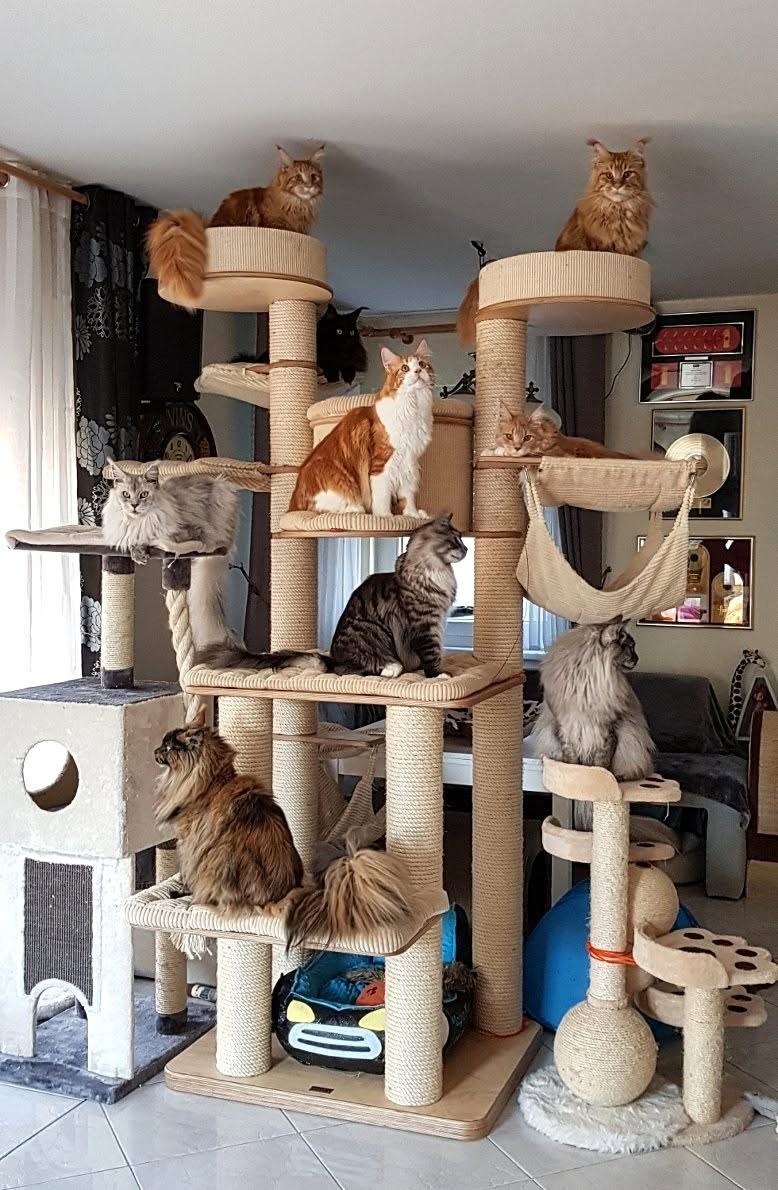
A cat tree should therefore not be judged solely by its height, the number of beds, the diameter of its posts or its attractive appearance. What matters is the entire structure and the way all of its components work together.
In the following sections, I explain what to look for, what to ask the seller and which details should make you cautious.
1. How is a professional scratching post constructed?
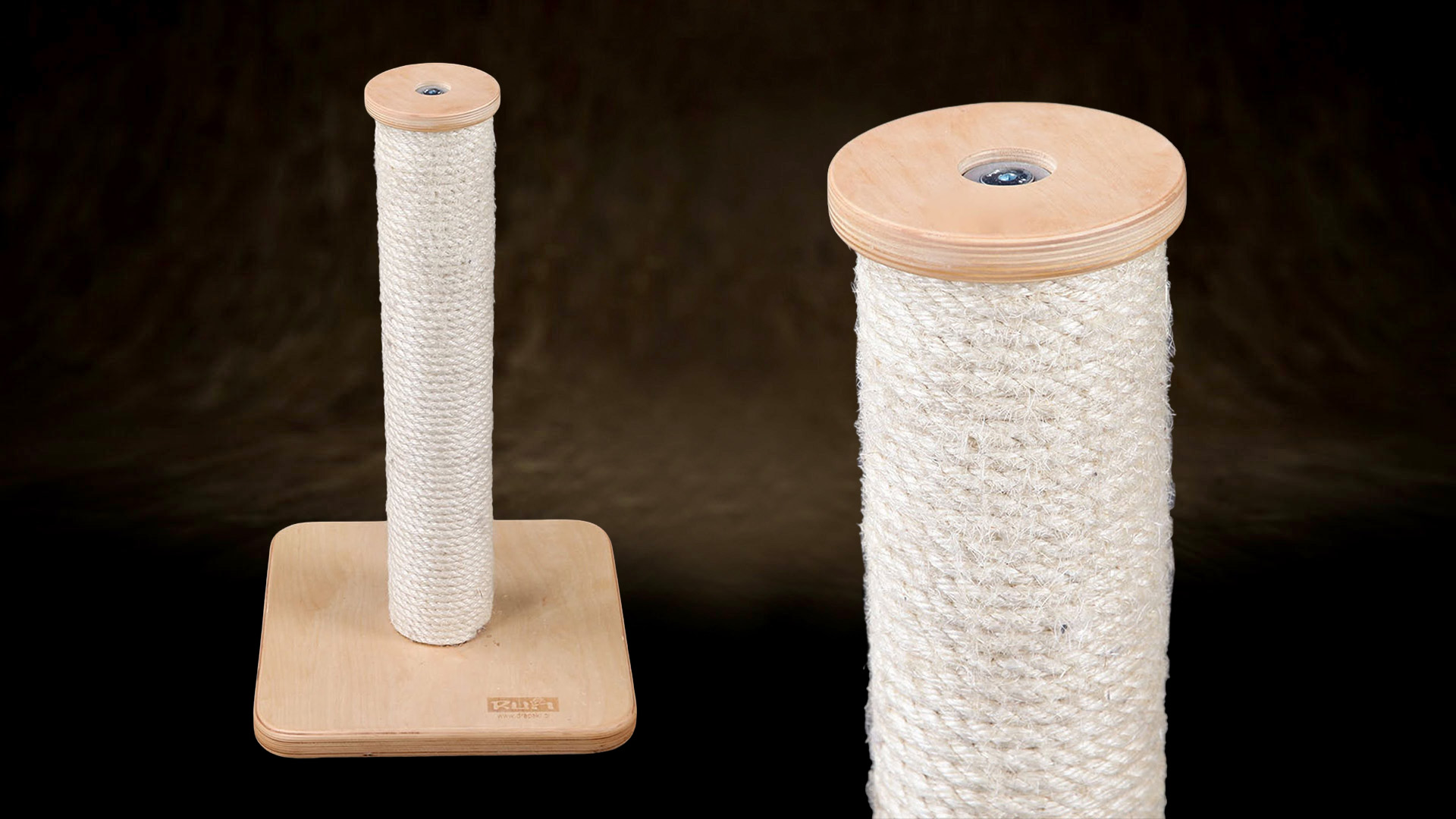
A post may appear to be one of the simplest components of a cat tree. From the outside, we usually see a round tube wrapped in sisal rope, which is why many people focus mainly on its diameter.
In reality, it is one of the most important parts of the entire structure. The cat digs its claws into it, supports its body weight on it, climbs and stretches, and during play often pushes off from it with considerable force.
The quality and durability of a scratching post depend on several factors:
- the diameter and quality of the sisal rope;
- the way the fibres are twisted;
- the accuracy and tension of the winding;
- the thickness and quality of the inner tube;
- the construction of the post ends;
- the way the fastening components are embedded;
- the size of the nut used.
Only the combination of all these features produces a post capable of withstanding intensive use over many years.
Sisal rope - diameter really matters
Sisal rope is the part of the post that comes into direct contact with the cat's claws. It is the element that wears during scratching, so its specifications have a major influence on the durability of the entire post.
One of the basic parameters is the rope diameter. It is also one of the few features that a customer can see and compare relatively easily and, after receiving the product, even measure personally.
As a general rule, thicker rope contains more material, so it takes a cat longer to wear through it. Diameter alone, however, is not the only factor affecting the durability of sisal.
When examining the rope, it is worth checking:
- its actual diameter;
- whether it is even along its entire length;
- the compactness and strength of the twist;
- the amount of short, protruding fibres;
- the accuracy with which the individual strands have been made.
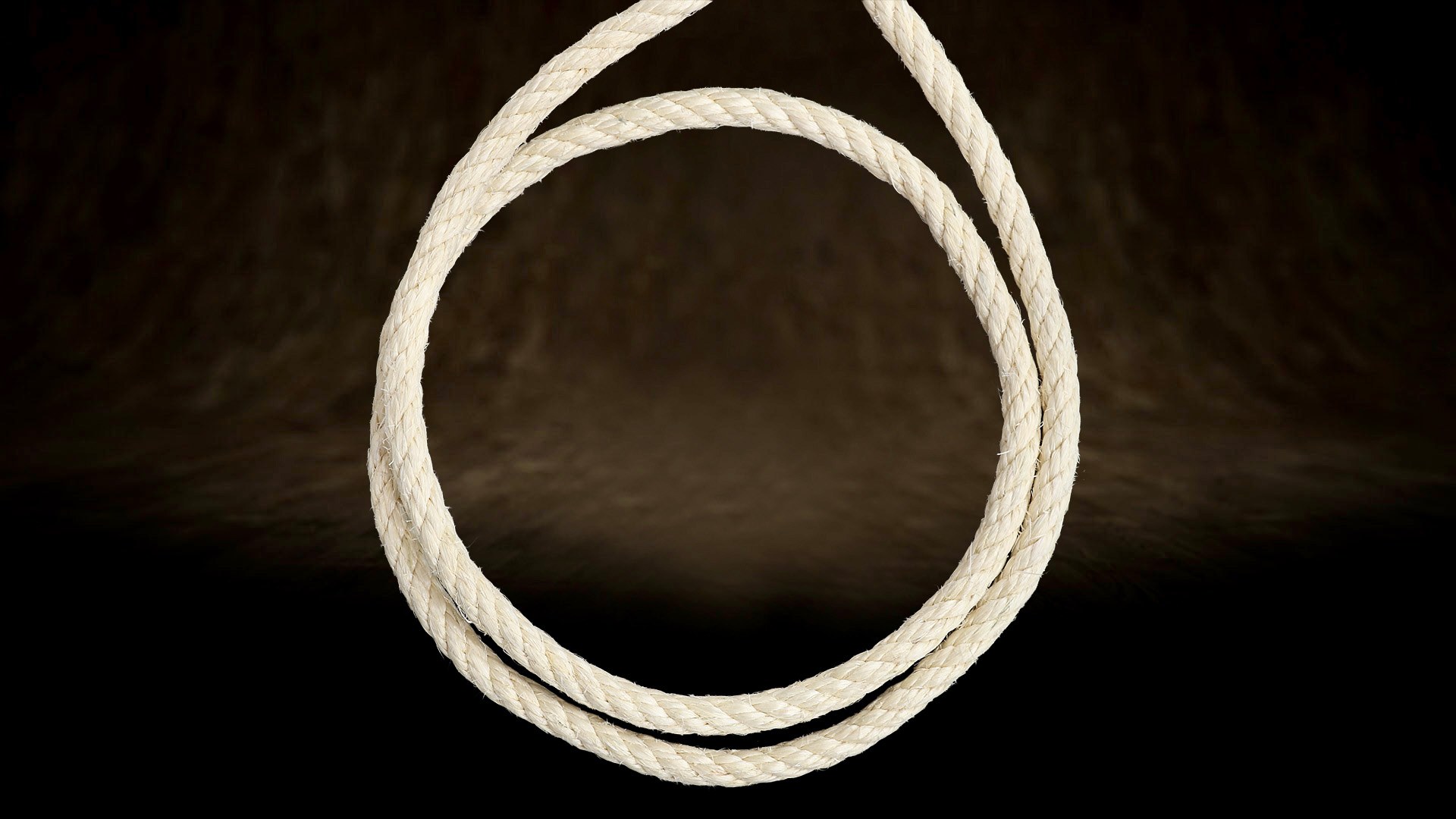
We use four-strand rope in our structures. Four separate strands are twisted into one compact rope that retains its shape well during winding and subsequent use.
The description "natural sisal" alone therefore says very little. Both the amount of material used and the quality of the fibres and the way the rope is manufactured are important.
How the rope is wound
Even thick, high-quality rope will not provide adequate durability if it is wound too loosely or unevenly.
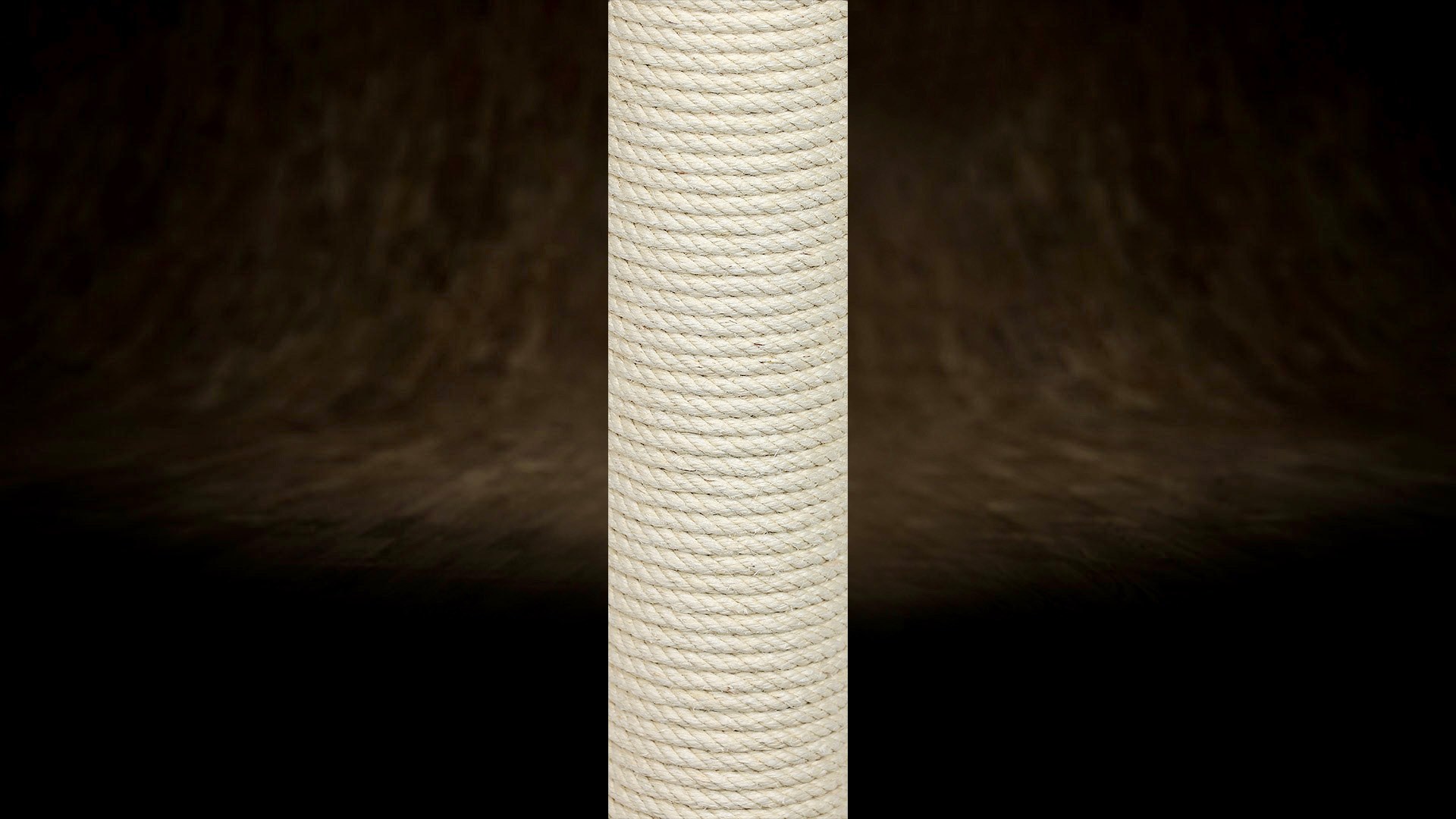
Each turn should fit very tightly against the next. No visible gaps should remain between them, because the cat's claws will gradually widen those gaps. Over time, the rope will begin to move, spread apart or lift away from the surface of the post.
Even rope tension is also extremely important. It should be maintained over the full length of the post, from the first turn to the last.
In professional production, posts are wound using specialist machinery. This makes it possible to maintain the correct rope tension while pressing every new turn very firmly against the preceding one.
As a result, the post surface is compact, even and resistant to movement during use.
When examining a finished post, check whether:
- the turns are even and tightly packed;
- there are no obvious gaps between them;
- the rope does not move when pressed by hand;
- the tension is similar along the full length;
- the ends have been permanently secured.
Some of these details can already be seen in good product photographs. Uneven turns, obvious gaps or locally loosened rope should not be ignored.
What is underneath the rope?
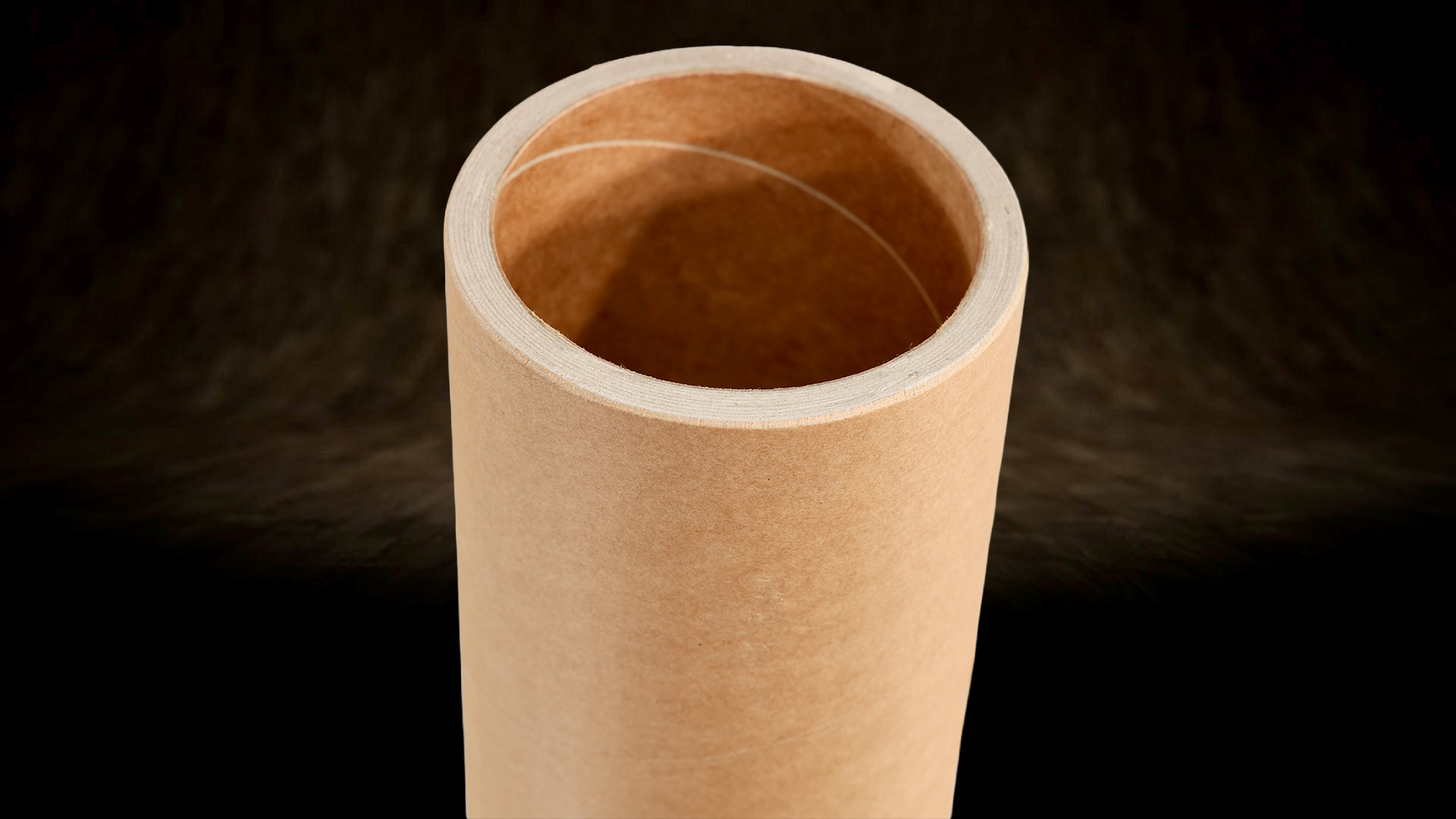
Under the sisal rope is the actual body of the post, most commonly a multi-layer paper tube. It is often casually called a cardboard tube, but it should not be compared with an ordinary thin cardboard roll.
A good tube is made from successive layers of paper wound and bonded under high tension. Its strength depends on several factors:
- wall thickness;
- the quality of the paper used;
- the quality of the adhesive bonding the layers;
- the accuracy and tension of the winding process.
A properly made tube should form a compact, almost uniform structure. Its cross-section should not contain visible voids, loose layers or areas where the paper separates easily.
A customer cannot, of course, assess the type of paper used, the properties of the adhesive or the precision of the manufacturing process. The final result can nevertheless be inspected.
Wall thickness is the easiest parameter to check
The basic parameter that can be seen and measured is the thickness of the tube wall.
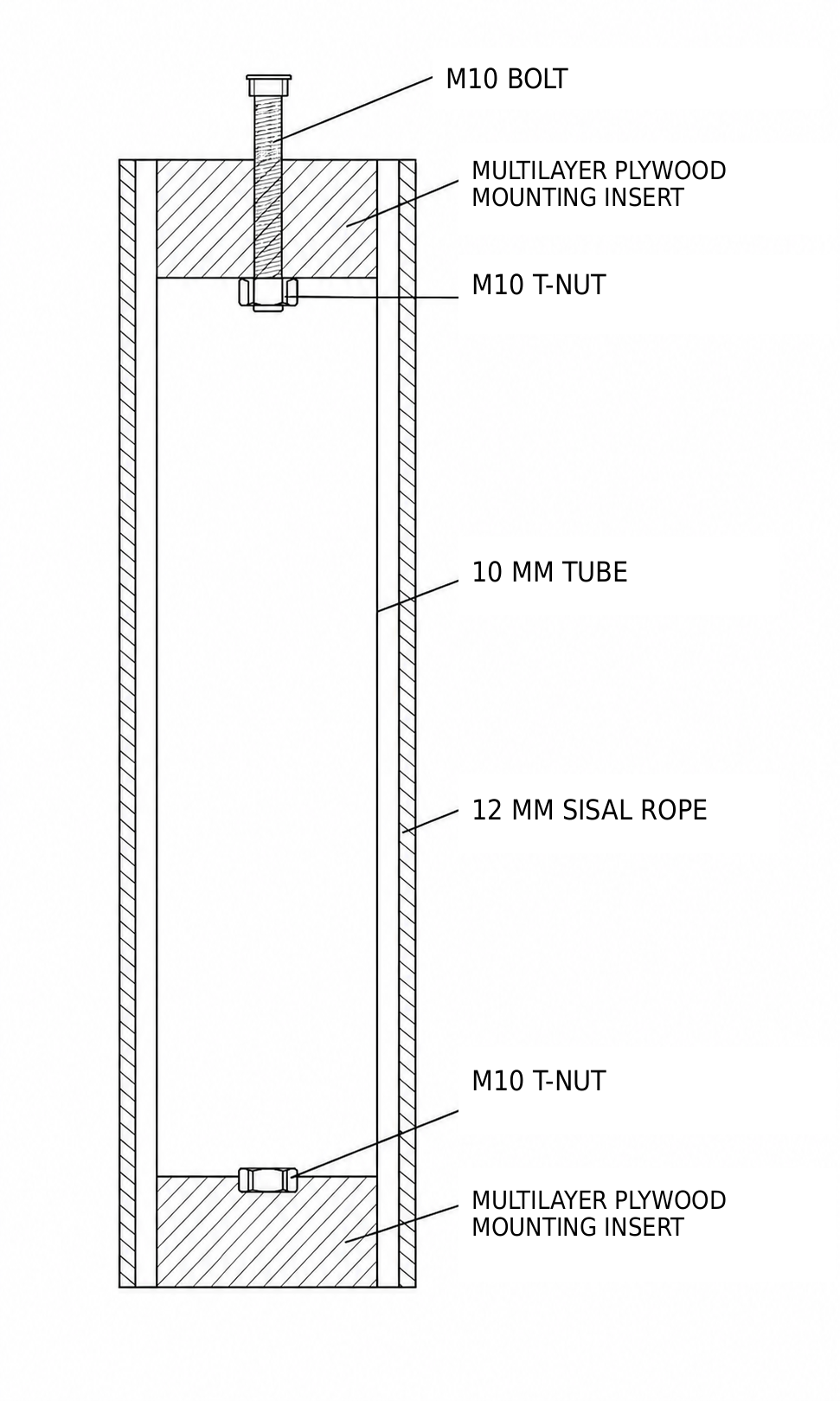
The posts we manufacture use tubes with a minimum wall thickness of 10 mm. This provides sufficient rigidity while also allowing the post ends to be securely fixed.
If, after receiving a cat tree, we find that the tube wall is only 2-3 mm thick, I consider it far too thin, especially for use in a tall or intensively used structure.
Such a thin tube can crush, delaminate or break. More importantly, it does not provide sufficiently strong support for the post ends. If those ends loosen or are pulled out, the entire cat tree may lose its stability.
In such a case, before assembly I would consider whether the product should be used at all. In a large or tall structure, this is no longer merely a matter of durability, but also of the cat's safety.
What can be checked after receiving the cat tree?
Before assembly, it is worth examining the posts from their ends. This allows you to check:
- the actual wall thickness;
- the compactness of the cross-section;
- visible gaps between the layers;
- delamination and crumbling of the material;
- the stability of the component closing the post.
A good tube should be rigid, compact and uniform. If its wall is extremely thin, bends easily, delaminates or contains visible voids in cross-section, this should raise serious concerns.
In that situation, it is more sensible to contact the seller before assembling the product and allowing the cat to use it.
The plywood insert and M10 nut
At both ends of the tube is a component that we informally call an insert or plug in our production process. The nut used to connect the post to a platform, the base or another cat-tree component is embedded in this part.
The insert is therefore not merely an end cap. It transfers the loads generated during use of the entire structure.
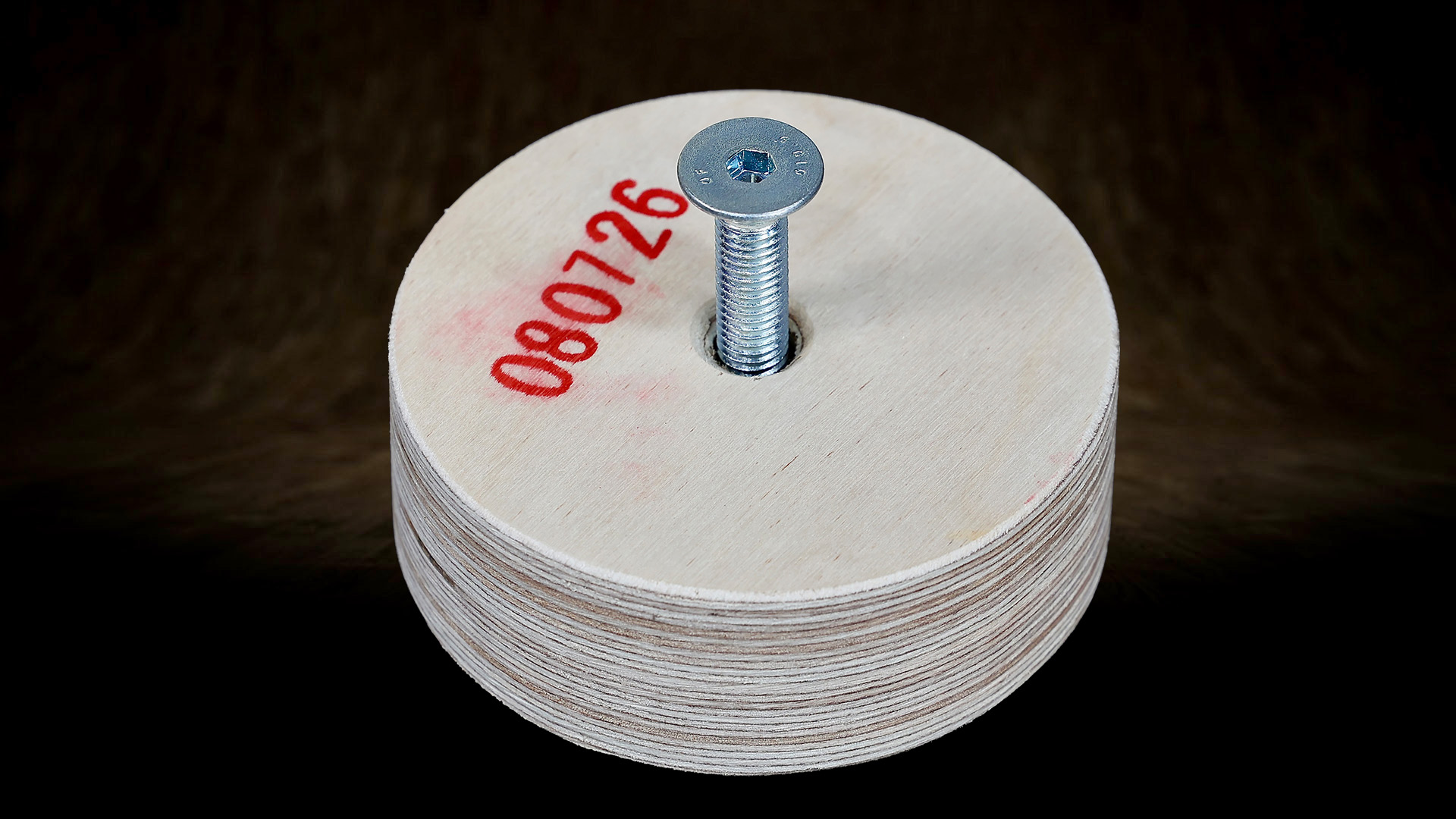
In our current posts, it is made from approximately 4 cm thick multi-layer plywood. An M10 T-nut is embedded in this component.
Plywood transfers forces effectively in different directions, while the appropriate thickness of the insert allows the nut to be seated securely and the entire component to be firmly joined to the tube.
In many cheaper cat trees, this type of insert is replaced by a plastic flange pushed or hammered into the tube. It usually contains an M6 or M8 nut.
Based on many years of experience, I do not consider plastic flanges used as post ends to be a durable solution. They can loosen, crack or be pulled out of the tube.
The flanges are usually glued and additionally secured with staples passing through the tube wall. If the wall is very thin, the staples have too little material in which to anchor properly. Repeated movement of the post can gradually tear the tube until the entire flange is pulled out.
In a tall cat tree, this is no longer simply a durability issue. Failure of the end of one of the lower posts can cause the entire structure to lose stability. This is particularly dangerous in floor-to-ceiling cat trees.
Why do we use M10 nuts in large cat trees?
A large cat tree must be tightened with considerable force. Only then will the joints resist gradually loosening while cats run, jump and climb on the structure.
In a small cat tree consisting of a base, one short post and a lightweight bed, a smaller nut may be sufficient. A tall, multi-level structure is a completely different matter.
M6 or M8 nuts and bolts do not allow the same tightening force as M10 components. When very high tightening force is applied, it is easier to strip the thread, damage the nut or pull it out of the component in which it is embedded.
For this reason, I regard an M10 nut as the minimum appropriate standard in large cat trees. This conclusion is not based on theory, but on many years of experience in manufacturing, assembling and using such structures.
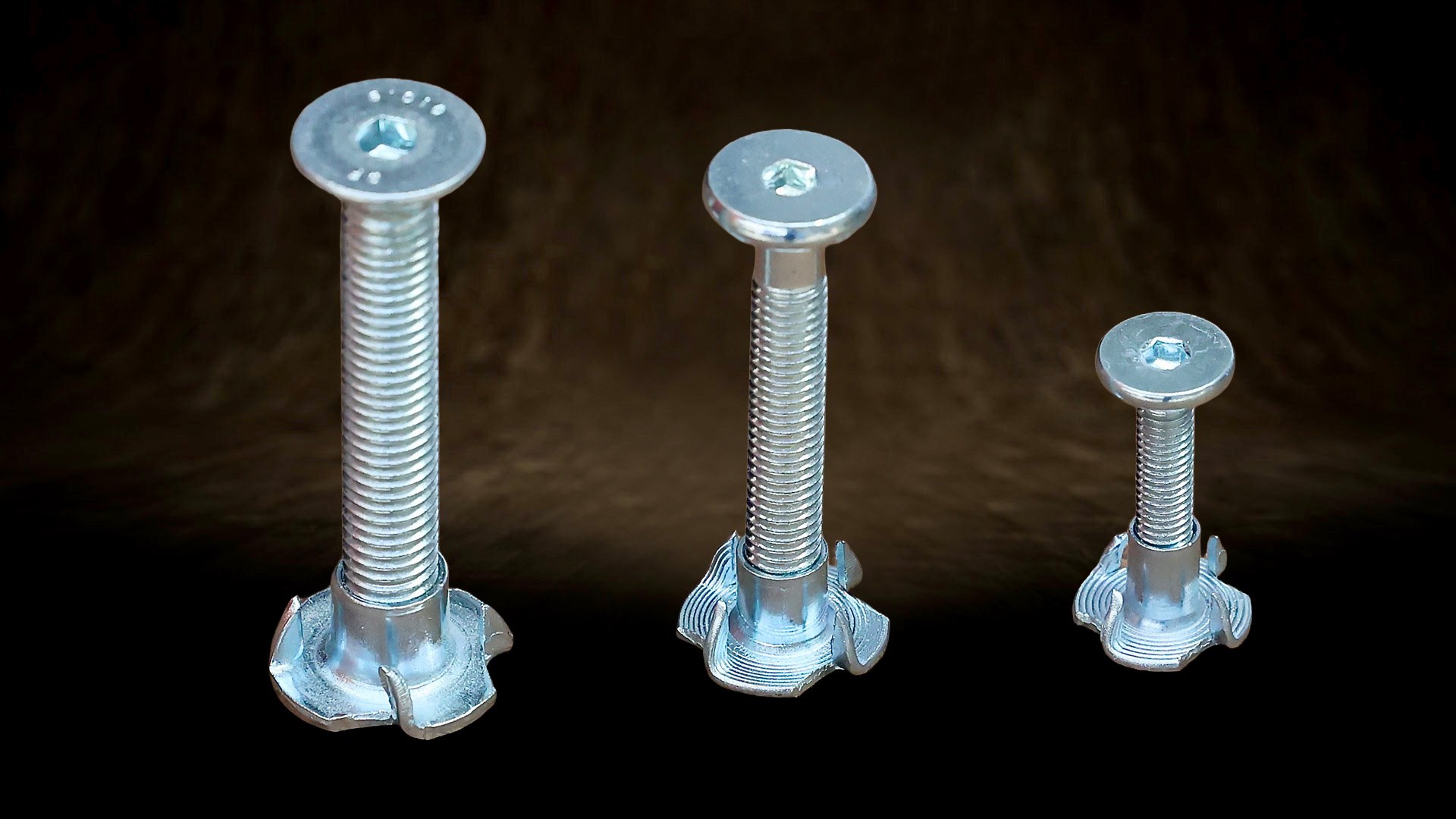
An M10 nut alone will not solve the problem if it is embedded in a weak plastic flange or a thin tube. All the components must work together:
- a thick-walled tube;
- a solid insert;
- a securely embedded M10 nut;
- a suitably strong platform or base.
Only this arrangement allows the cat tree to be tightened firmly and the joints to remain stable over many years of use.
How should a post be checked before assembly?
After receiving the cat tree, it is worth examining all the posts before beginning assembly. The basic structural components can be checked easily from the ends.
Pay attention to:
- the actual thickness of the tube wall;
- the type of insert or flange used;
- the size of the embedded nut;
- the stability of the entire end component;
- any cracks, delamination or looseness.
The insert should not rotate, slide out or tilt sideways. The nut must not move independently of the rest of the post either.
If the end already wobbles before assembly, tightening the bolt firmly will not remove the cause of the problem. It may only conceal the looseness temporarily and can even accelerate failure of the weak component.
If the tube itself is extremely thin, bends, delaminates or has been damaged during transport, it should not be installed in a tall structure. In that situation, it is more sensible to report the problem to the seller before the cat begins using the tree.
Why is post diameter alone not enough?
Post diameter is important, but it does not reveal how the post was made.
Two posts with the same external diameter can have completely different levels of durability. One may contain a thick-walled tube, a plywood insert, an M10 nut and thick rope wound correctly under tension.
The other may have an extremely thin tube, plastic flanges with M6 or M8 nuts and loosely wound sisal.
In a photograph, the two may look almost identical.
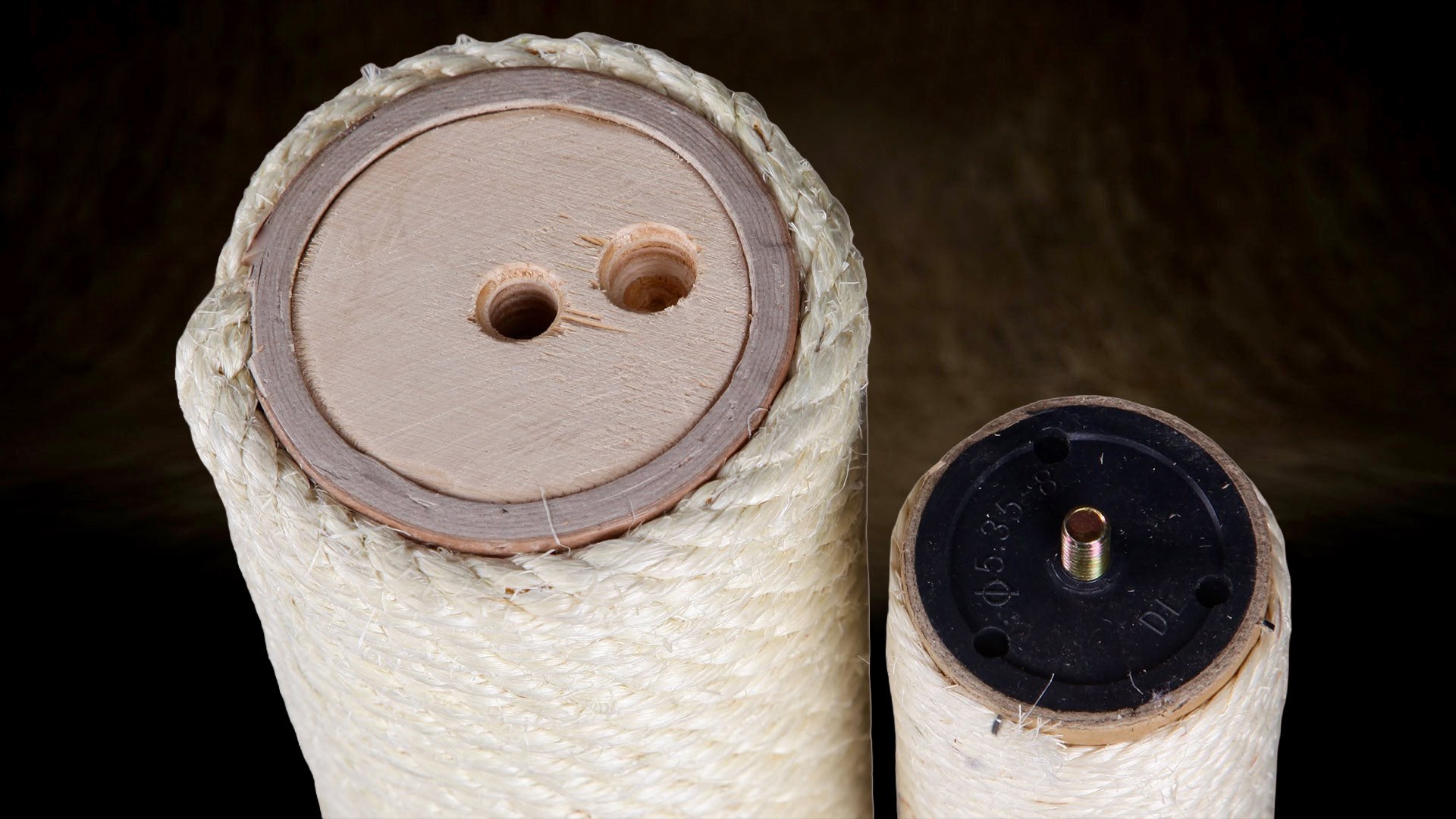
When choosing a cat tree, it is therefore worth checking not only the post diameter, but also:
- the diameter and construction of the sisal rope;
- the accuracy of the winding;
- the tube thickness;
- how the inserts are made;
- the size of the nuts used;
- the stability of all components before assembly.
If the manufacturer merely describes the posts as "thick and solid" without providing any specific information about their construction, it is worth asking for details.
2. Cat-tree construction - what really determines stability?
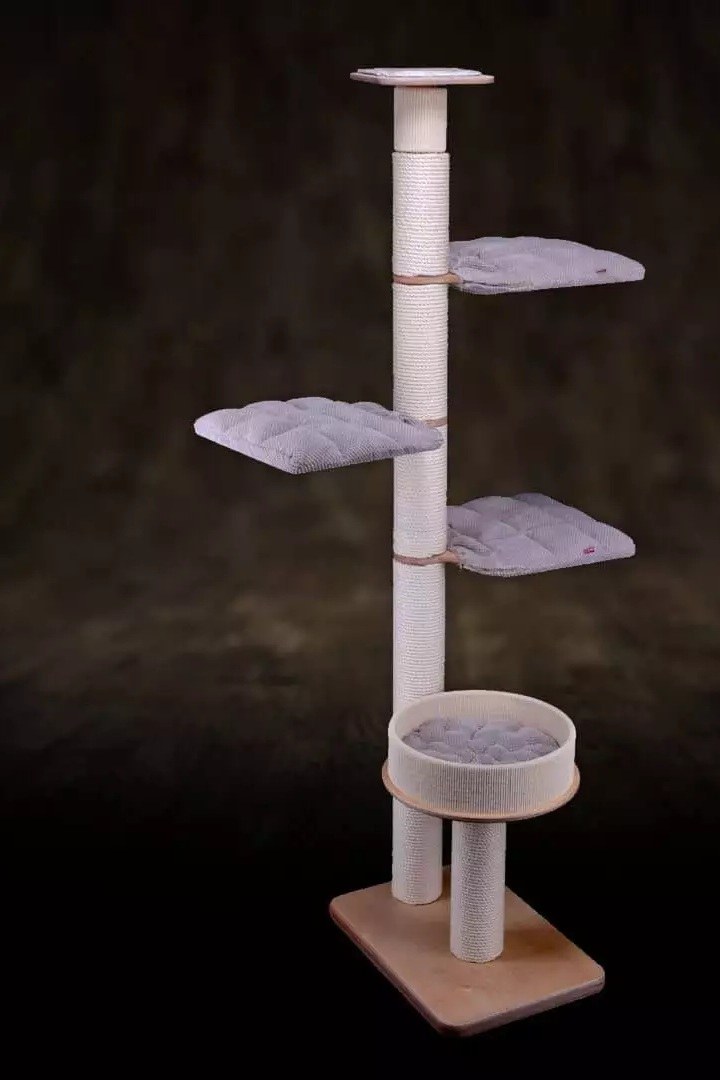
Solid posts are extremely important, but they cannot ensure the stability of the entire cat tree on their own. Even good components can be combined in a way that allows the structure to sway, lean or lift on one side when a cat jumps onto it.
The stability of a cat tree is influenced mainly by:
- the size and rigidity of the base;
- the arrangement of the posts;
- the position of the centre of gravity;
- the size and arrangement of the platforms and beds;
- the quality of the joints;
- correct tightening of the structure.
A good cat tree should be designed as one integrated system, not as a random collection of posts, platforms and beds.
The base of the cat tree
The base transfers the weight of the entire structure to the floor. It should be sufficiently large, heavy and rigid.
Its dimensions alone, however, are not enough. The positions of the posts and upper components are equally important. If the posts stand close to the edge while platforms and beds project heavily to one side, even a large base may fail to provide adequate stability.
We make the bases of our structures from 36 mm multi-layer plywood. This thickness provides high rigidity and limits bending under load.
Arrangement of the posts
The posts should form a stable support system and transfer loads to the base as directly as possible.
A cat tree supported by a single vertical line of posts will be less resistant to lateral loads than a structure with several well-positioned support points.
This is particularly important in tall cat trees, because even a small amount of looseness in the lower section will be much more noticeable at the top.
Centre of gravity
Large houses, wide platforms and beds positioned high above the floor have a major influence on the stability of a cat tree.
The heavier an element is and the higher and farther it is positioned from the centre of the base, the greater the force it applies to the lower posts and joints. A tall cat tree with a small base will therefore not become stable merely because thick posts have been used.
The weight of the entire structure should be distributed as evenly as possible.
Platforms also brace the structure
Platforms are not only places for the cat to sit. They connect the posts and brace the entire cat tree.
If they are too thin or made from a material that bends easily, they flex every time the cat moves. Over time, this can create play in the joints.
In our cat trees, platforms are made from 18 mm multi-layer plywood. This provides suitable rigidity, especially when a platform connects several posts or projects beyond its support point.
A heavy cat tree is not always stable
High weight helps, but it cannot correct structural design errors.
A heavy cat tree may still sway if its base is too small, the posts are poorly positioned, the upper components project too far or the joints are loose.
Stability should therefore not be judged solely by weight, height or the number of posts. Correct design of the entire structure is what matters most.
How can the stability of a cat tree be checked?
After assembly, the cat tree should stand evenly across the whole surface of its base. It should not rock under light pressure or lift at one corner.
Check whether:
- the base sits flat on the floor;
- the posts are vertical;
- the platforms do not rotate or flex;
- the structure does not lean noticeably to one side;
- no movement of loose joints can be heard when pressure is applied.
A small amount of elastic movement in a tall cat tree may be natural. There should, however, be no looseness, knocking or independent movement of individual components.
If a correctly assembled cat tree remains unstable, the problem may result from its design, an undersized base or incorrect arrangement of the components.
3. Structural materials and surface protection
In a good cat tree, not only the thickness of the platforms and base matters, but also the material from which they are made.
We use multi-layer plywood in our structures. Compared with chipboard or MDF, it is much more resistant to bending, mechanical damage, edge crumbling and the pulling out of fastening components.
This is very important in a cat tree that is constantly loaded in different directions. Cats jump onto the platforms, push off from them and set the entire structure in motion. Plywood withstands this type of work and repeated assembly very well.
Chipboard crumbles much more easily around drilled holes and screw fixings. MDF has a more uniform structure, but it is also vulnerable to edge damage and does not provide fastening as durable as good-quality plywood.
The finish is extremely important
Even the best plywood should be protected properly. A good finish protects it from dirt, moisture, abrasion and scratches while also making the cat tree considerably easier to keep clean.
From my observations of the market, most available cat trees, including many made from plywood, use simple and relatively inexpensive water-based coating systems. These finishes are often applied in only a small number of layers and do not provide high mechanical resistance.
The statement that an element has been varnished therefore says little about its durability. What matters is the quality of the products used, the preparation of the surface, the number of coats and the application method.
Our cat trees use a multi-layer spray-finishing system. We first apply two coats of a specialist primer, followed by two coats of hard acrylic lacquer.
Once fully cured, this creates a strong, resistant surface that withstands many years of use, regular cleaning and contact with cats' claws. The coatings we use are also intended for heavily used surfaces such as staircases in public buildings.
On stained cat trees, staining is used only to obtain the selected wood colour. The components then undergo exactly the same protective process: two primer coats and two coats of hard acrylic lacquer.
As a result, both natural-coloured plywood and stained components receive the same durable protection.
4. The size of platforms, beds and houses
Even a very solid cat tree will not perform its function well if its platforms, beds and houses are too small for the cat.
Particular care should be taken with products advertised as "cat trees for large cats" or "cat trees for Maine Coons". A phrase in the product name does not in itself mean that the structure has genuinely been designed for a large cat.
Check the actual dimensions
Before buying, examine the dimensions of each component carefully, not only the total height of the cat tree.
If a structure advertised for large cats has platforms measuring 20 x 20 cm or 30 x 30 cm, it is difficult to regard them as comfortable and safe places for a large animal.
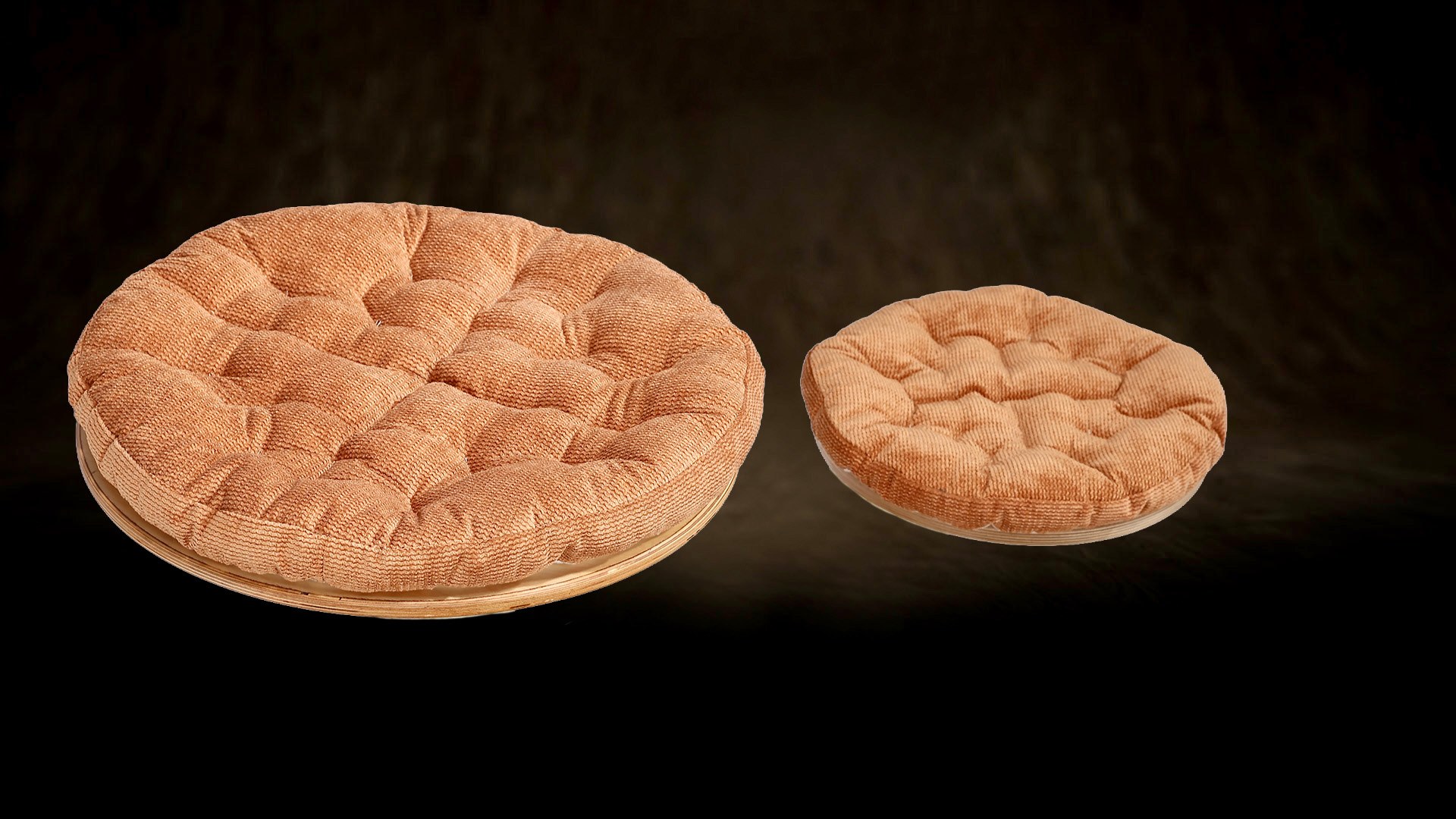
The cat should be able to step onto a platform freely, turn around and position its entire body securely. The same applies to beds: their actual usable area matters, not merely the external measurement stated in the description.
In particular, check:
- the dimensions of the platforms;
- the usable area of the beds;
- the internal dimensions of the houses;
- the size of the entrances;
- the distances between successive levels.
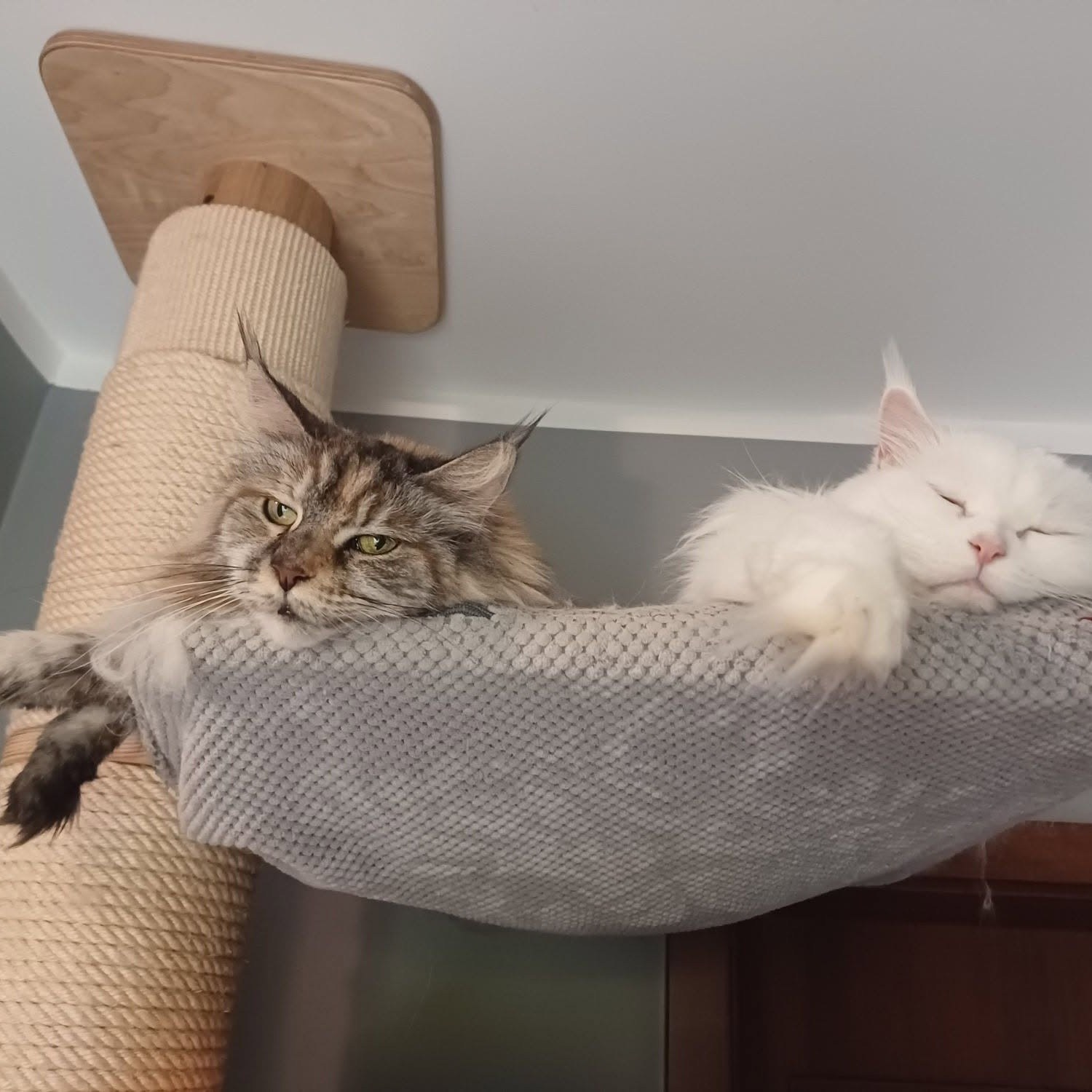
A good cat tree should provide a comfortable route from the base to the highest resting places. Platforms that are too small or levels that are poorly arranged can make movement difficult, especially for large, older or less agile cats.
A house should have a genuine rigid structure
In many cheap cat trees, the component described as a house is actually only a lightweight frame covered with upholstery fabric. The walls have no rigid construction and the shape is maintained mainly by the tensioned textile.
This solution may look attractive in a photograph, but it is usually not very resistant to pressure, deformation or intensive use. The fabric can stretch, the frame can bend and the whole house can quickly lose its original shape.
In a cat tree intended for a large cat, the house should have stable walls, a rigid base and a structure that does not bend under the animal's weight.
Before buying, it is therefore worth checking not only the size of the house but also the way it is constructed. If the photographs show no rigid walls and the whole item looks like fabric stretched over a thin frame, it should not be treated as a full structural component.
The label "for large cats" is not enough
A cat tree for a large cat should be designed appropriately as a complete structure. One larger post or a single large bed is not enough if the remaining platforms are miniature, the house has no rigid construction and the passages between levels are too narrow.
The posts should also be matched to the cat's size. They need sufficient diameter to carry the greater loads reliably and sufficient length for the cat to stand freely on its hind legs and stretch its entire body while scratching.
The best basis for assessment is specific dimensions and photographs showing the actual construction of the individual components. If the manufacturer does not provide them, ask for additional information before buying.
5. Upholstery materials - durability, finishing and washability
Upholstery fabric affects more than the appearance of a cat tree. Its resistance to snagging, the way it is attached and the possibility of keeping it clean are equally important.
We use two finishing methods in our cat trees: permanently upholstered components and removable covers and cushions attached to lacquered plywood.
Permanently upholstered cat trees
In permanently upholstered cat trees, the platforms and other components are covered on both sides. All fabric joins are concealed along the edges, so the cat has no access to seams, staples or other fastening elements.
Before upholstery, all edges are carefully sanded and smoothed. This is important because sharp or poorly finished edges could gradually wear through the fabric from underneath.
Properly made upholstery should therefore:
- fit closely over the entire surface;
- have no visible fastenings;
- leave no seams or staples accessible to the cat;
- be protected against abrasion along the edges.
Resistance of fabrics to snagging
All upholstery materials used by us undergo manufacturer testing for resistance to scratching and snagging. They received the highest rating in these tests: five stars.
The result of a surface test alone is not always sufficient, however. A cat drives its claw deeply into the fabric and may also catch the backing layer.
Many standard furniture fabrics have a flexible, slippery backing. Although the outer surface may be durable, the claw catches the backing more easily and pulls fibres through to the surface.
For that reason, some of our fabrics are ordered with a special cotton backing. From the outside, they may look identical to fabrics available from ordinary upholstery wholesalers, but their underside is better suited to the way cats use the material.
This does not make the fabric completely resistant to deliberate scratching. The correct backing does, however, considerably reduce the risk of pulled fibres and increases the durability of the upholstery.
Removable covers, cushions and padded beds
In cat trees made from lacquered plywood, soft covers, cushions and padded beds are attached with hook-and-loop fasteners. They can be removed easily, washed, dried and reattached.
Each such component has a sewn-in care label. The recommended washing temperature is 40°C.
Before a new fabric enters production, it undergoes several dozen washing and tumble-drying cycles. As part of the testing, we also assess its resistance to washing at 60°C, although for everyday use we recommend the temperature stated on the label, namely 40°C.
During the tests, we check among other things:
- fabric shrinkage;
- colour fastness;
- retention of the original shape;
- resistance to pilling;
- the appearance of the surface after repeated washing and drying.
Only a fabric that performs well through repeated washing and drying cycles is approved for regular production. This allows removable textile components to be cleaned many times without rapidly losing their shape, colour or functional properties.
6. Quality control
Most wooden components of our cat trees are machined with high precision on CNC routers, using previously prepared designs and production programs. This ensures repeatable dimensions, accurate hole positioning and the correct fit of all parts.
After machining, the components undergo the multi-layer finishing process described above or are sent to the upholstery department. They are then subjected to detailed visual and quality inspection.
Only components that meet the standard required for products in our regular range continue through production. At this stage, approximately 20% of manufactured parts are rejected because of visual imperfections such as:
- natural variations in the colour of the wood;
- knots or differences in its structure;
- small defects or unevenness in the lacquer coating;
- minor upholstery imperfections;
- other aesthetic imperfections.
If a component retains full structural strength and remains safe to use, it may be used in an outlet product. Parts with structural defects or damage that could affect the durability of the cat tree are not permitted to continue in production.
The final inspection takes place immediately before packing. Components prepared by the individual production departments come together in one location:
- lacquered and upholstered platforms and bases;
- posts wrapped in sisal rope;
- houses and beds;
- sewn covers, cushions and padded beds;
- mounting hardware.
Every part is inspected again by an experienced employee. Where necessary, selected components are also test-fitted to ensure that the holes, fixings and dimensions align correctly.
Only after this final verification is the complete set passed for packing. This allows us to check not only the quality of each part, but also whether all the components of a specific cat tree form a correctly matched set.
7. How can you check the quality of a cat tree yourself?
Much of the most important information can be checked before buying. Read the product description carefully, examine the photographs and stated dimensions, and ask the seller if any information is missing.
Before buying, pay particular attention to:
- the diameter of the posts and sisal rope;
- the dimensions of the platforms, beds and houses;
- the material and thickness of the base and platforms;
- the construction of the houses;
- the arrangement of the individual levels;
- the availability of spare parts;
- information on cleaning the textiles.
Do not base your decision solely on descriptions such as "solid", "for large cats" or "Maine Coon cat tree". Specific dimensions and technical information are what matter.
What should be checked after receiving the cat tree?
Before assembly, examine all the components carefully.
Check:
- the thickness and quality of the tubes inside the posts;
- the type and stability of the post mounting components;
- the size of the embedded nuts;
- the accuracy of the rope winding;
- the quality of the lacquer finish or upholstery;
- the edges of the platforms and base;
- whether all components correspond with the instructions.
There should be no visible cracks, delamination, loose ends, protruding staples or damaged joints.
Be particularly cautious if the posts have extremely thin tubes and the plastic flanges inside them move, rotate or tilt sideways. In such a situation, I would consider whether assembly should be started at all.
Tightening the bolts firmly may temporarily reduce visible play, but it will not repair a weak tube or an unstable mounting component. In a large or tall cat tree, failure of one of the lower posts can cause the whole structure to lean or fall over.
Such a product may therefore not only fail quickly, but may also present a danger to the cat for which it was purchased and to people nearby. If the structural components already raise serious concerns before assembly, it is more sensible to contact the seller and consider returning the product.
After assembly, the cat tree should stand evenly and every component must be firmly tightened. Platforms and posts should not move independently of the rest of the structure.
If the cat tree still wobbles noticeably despite correct assembly, the base lifts on one side or any component has visible play, the cat should not be allowed to use it. First check the assembly again; if the problem remains, contact the seller.
Remember to retighten the cat tree periodically
All components should be tightened firmly during assembly. Cats run, jump and push off from the structure, so some joints may gradually loosen slightly during use.
Check the stability of the cat tree periodically and retighten all posts and bolts where necessary. Pay particular attention to the lower structural components, which carry the greatest loads.
If you use one of our cat trees, all posts and hex-socket bolts can be tightened with very high force. If necessary, an extension can be used on the Allen key, or a suitable power tool may be used.
The hardened hex-socket bolts, M10 nuts and other fastening components we use are designed to withstand very high loads. These joints are covered by a lifetime warranty.
During assembly, simply ensure that the bolt enters the nut straight. Starting it at an angle can damage the thread.
8. Spare parts, servicing and refurbishment
A good cat tree should not be a disposable product. Before buying, it is worth checking whether worn parts can be replaced after several years, individual components can be refurbished and the manufacturer's service can be used.
For our cat trees, we offer among other things:
- posts and mounting components;
- platforms, beds and other structural parts;
- covers, cushions and padded beds;
- complete textile sets matched to individual models;
- refurbishment services for selected components.
On cat trees made from lacquered plywood, covers, cushions and padded beds can be removed and replaced with new ones at any time. Ready-made textile sets are available for individual models, making it easy to refresh the appearance of the entire cat tree.
We also refurbish permanently upholstered components. If the fabric is worn after many years or the customer wants to change its colour, platforms, bases and other parts can be reupholstered.
Plywood components can also be refinished. This refreshes surfaces on which scratches, worn areas or other signs of long-term use have appeared.
We also offer sisal-rope rewinding of posts. Customers send us posts that have been used for six, seven or more years; they receive new rope and can continue to be used.
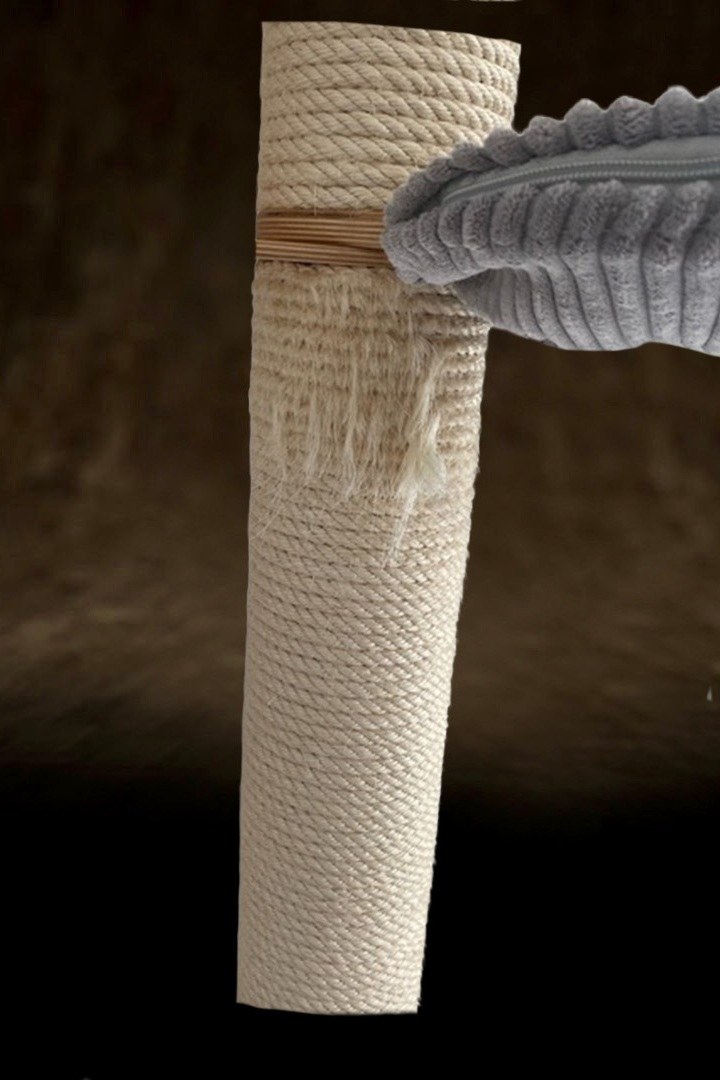
A component does not always have to be completely destroyed. It may still retain full strength while its surface is no longer visually attractive. Refurbishment restores its appearance without requiring replacement of the entire cat tree.
The availability of spare parts and servicing is particularly important for large, solid structures. If the cat tree remains stable, replacing or refurbishing individual components is far more sensible than discarding the whole product after several years.
9. Summary - how can you really recognise a good cat tree?
A good cat tree cannot be judged by a single parameter. Thick posts, great height or attractive photographs are not enough if the remaining components are poorly made or badly arranged.
Before buying, it is worth checking in particular:
- the diameter and quality of the sisal rope;
- the accuracy of the winding;
- the thickness and quality of the tubes;
- the construction of the post ends;
- the use of M10 nuts in large structures;
- the rigidity of the base and platforms;
- the arrangement of the posts and the centre of gravity;
- the quality of the lacquer finish and upholstery;
- whether the platforms, beds, houses and post lengths suit the size of the cat;
- the accuracy of manufacture and quality control;
- the ability to clean and wash the textile components;
- the availability of spare parts, repairs and servicing.
Not every cat needs the same structure. A smaller Sphynx or Russian Blue will have different requirements from a large Norwegian Forest Cat or Maine Coon. The dimensions of the platforms, beds, houses and posts should therefore be matched to the animal's actual size, weight and agility.
A good cat tree should be stable, safe, comfortable for the cat and repairable after many years. It is therefore worth looking beyond appearance and price and focusing above all on the materials, construction and specific information provided by the manufacturer.